daily graces

Holding Both

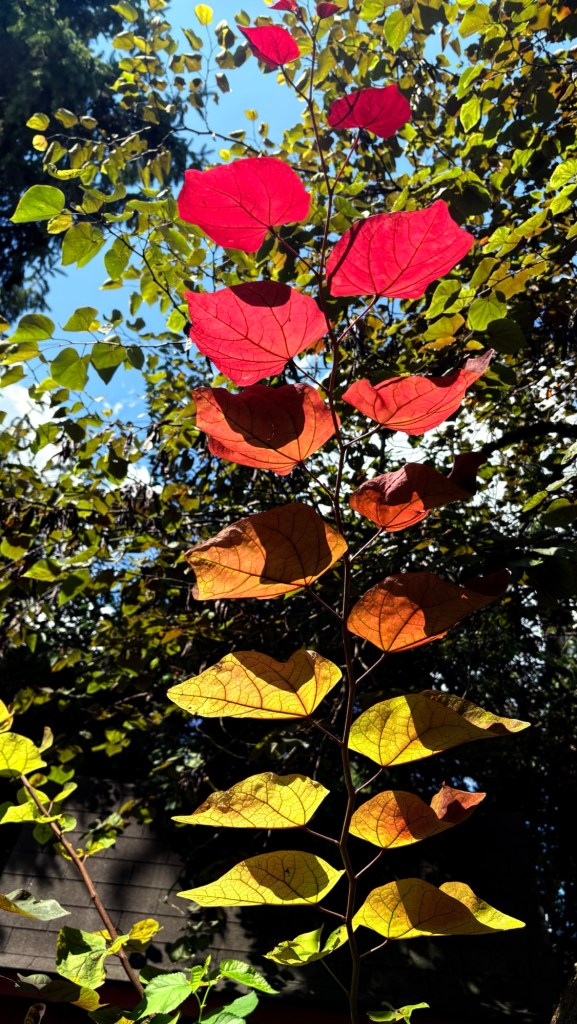
My dresser drawers are an awkward level of stuffed right now. You see, the calendar says we are between Spring and Summer— the time of year when the temps warm up to a delightful cozy warm, but still cool enough to enjoy being outside without your face melting. This year however, we seem locked into some eternal cold front of a winter that is reluctant to release its grip. So I have all my cozy cool weather clothes, but there have also been handfuls of days warm enough to unpack some short sleeves and other summer clothes, so slowly my dresser has become a mish mash of three different seasons. My shoe basket is piled high with a mashup of boots, flip flops, baseball caps, and beanies, lending no real clarity to which season we are actually in.
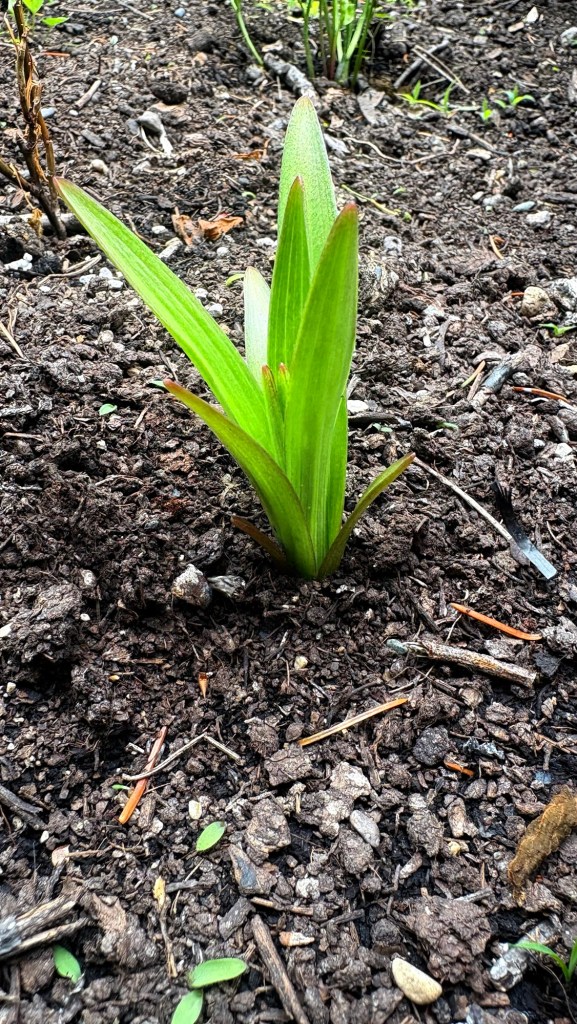
And honestly, I think my heart has looked a lot like my dresser lately—a strange mixture of seasons all occupying the same space at the same time.

There are things in my life right now that feel deeply good. Prayers being answered. Unexpected joy. Moments that make me laugh so hard I forget, for a second, how heavy life can be. There are relationships growing, little victories worth celebrating, reminders of God’s kindness showing up in ordinary places.

And yet, folded right beside those things are grief, uncertainty, exhaustion, disappointment, and questions I still don’t have answers to.

I keep wanting to organize it all neatly. To separate the winter from the summer. To decide whether this season is hard or beautiful. Joyful or painful. Hopeful or heartbreaking. But life rarely fits into tidy drawers.

Scripture is full of people holding both. The Israelites carried promised land hope while still wandering in wilderness dust. David wrote songs of praise with tears still wet on his face. Martha confessed deep belief in Jesus while standing beside her brother’s grave. Even Jesus, on the night before the cross, broke bread with His friends while fully aware of the suffering ahead.

Faith was never pretending one season didn’t exist. Faith is trusting God enough to hold all of it honestly.

Maybe maturity in Christ looks less like “finally getting to the good part” and more like learning that God is present in every part. In the celebrations and the sorrow. In the healing and the waiting. In the warmth of summer days and the lingering chill that refuses to leave.

Maybe the goal is not to force our lives into one season at a time, but to recognize that sometimes God grows things in the tension of both.

So for now, my drawers remain overstuffed and confused. My shoe basket still looks ridiculous. And my heart still carries both gratitude and grief at the exact same time.But I’m learning this; the coexistence of joy and pain does not mean God is absent. Sometimes it is the clearest evidence that He is gently teaching us how to become people who can hold both hope and heartbreak without letting either one define us completely.

And maybe that messy middle place — where winter and summer overlap — is holy ground after all.

Multiple System Atrophy

The Sound of Survival

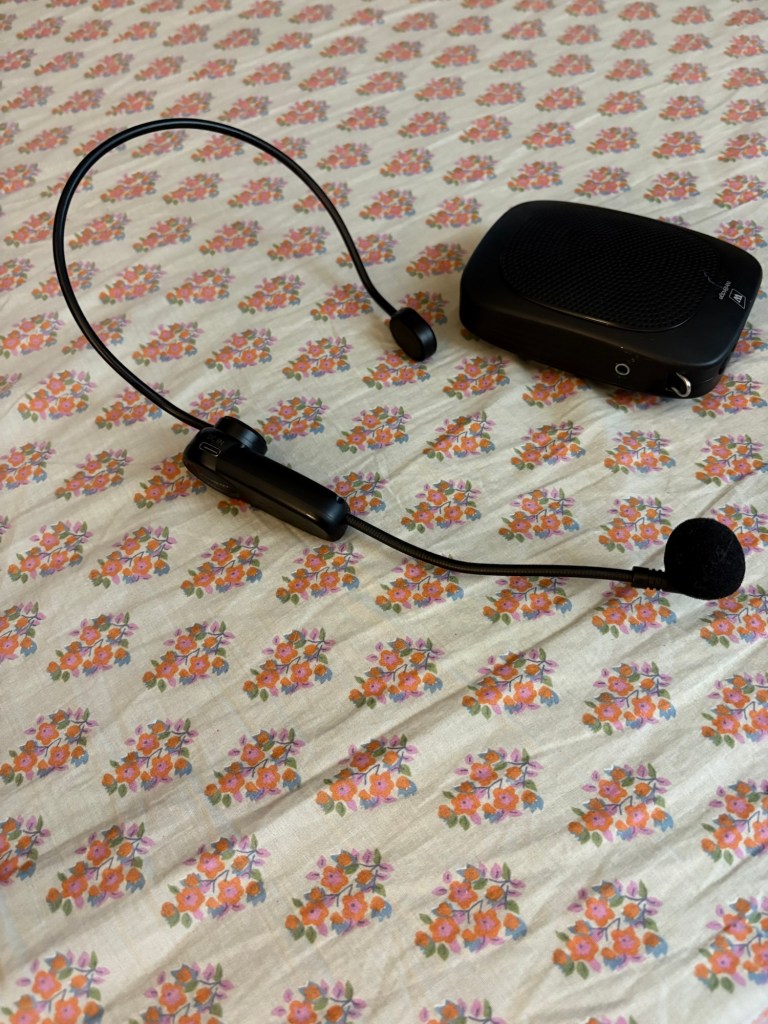
As my muscles weaken and I spend more time on my ventilator, my voice is fading as well. After much frustration trying to gather enough breath to make myself heard, especially from another room, we came up with a new solution.

I was delighted that with my new amplifier I can easily be heard, even in my softest voice. It saves me a lot of breath, and makes it easier for the people around to understand me.

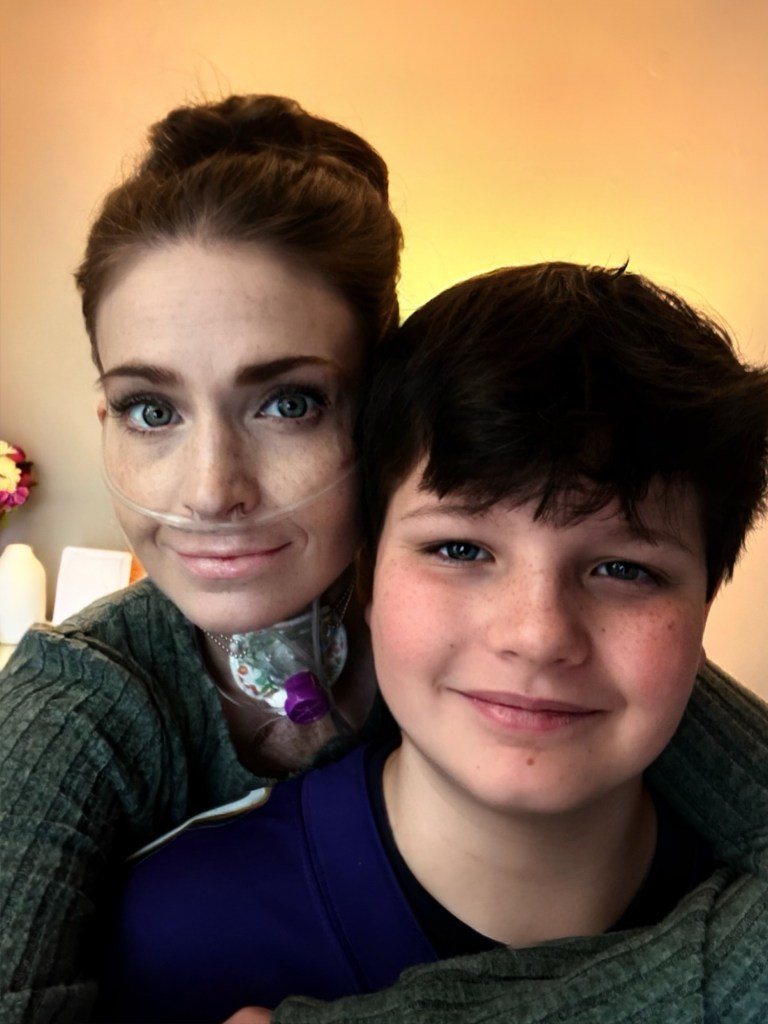
However, this didn’t necessarily go over well with everyone. When my young son saw the demonstration of my new device his eyes widened. “Please do not EVER use that in front of any of my friends.” Ahh, I’ve seen this hard embarrassment before. It happened when I initially needed a machine to support my breathing, and it happened when I first started using a wheelchair. Whenever we were headed somewhere, he would ask, “are you bringing your vent? Are you bringing your chair?” Earlier on I was able to provide some balance- leaving these behind to make it through short events with him so that he had one less thing to worry over. As my condition has progressed however, these helps are a more constant companion. But here we are with a new player on the scene, and my heart breaks for my boy who just longs for some normalcy.

And so I find myself holding two truths at once. I am deeply grateful for tools that allow me to remain present, to speak, to be heard, to stay connected to the people I love. And I am also grieving alongside my son, who did not ask for a mother whose body requires so much explaining.

His embarrassment is not cruelty. It is not rejection. It is the ache of a child who wants to blend in, who wants his world to look like everyone else’s, who is already carrying more than his fair share of difference. I recognize that look in his eyes—the same one I’ve seen when strangers stare too long, when friends ask questions he doesn’t know how to answer, when he realizes yet again that our family does not move through the world unnoticed.

So I try to meet him with gentleness. I remind him that it’s okay to feel this way. That loving me doesn’t mean loving every machine that keeps me going. That embarrassment and compassion can exist in the same heart. I tell him that these devices are not symbols of failure, but of persistence—that they are the reason I can cheer for him, listen to his stories, and whisper “I love you” at the end of the day.

And I also do the harder work of letting go of the bargain I once tried to make—of believing I could soften this for him by minimizing myself. I am learning that my job is not to disappear to make life easier for those I love, but to model what it looks like to live honestly within limitation, without shame.

One day, I hope he will remember not the sound of the amplifier or the sight of the tubes, but the way we kept showing up for each other anyway. I hope he will know that his mother did not give up her voice—even when it came out differently than before.

family

Letting Go, One Christmas at a Time

My youngest turned 13 earlier this week. Somehow I managed to get through that day and several more before it really hit me. My youngest baby is a teenager! The exact time this news caught up with my heart and my tears was the night before Christmas as I finished up my gift wrapping.

I picked a book from my stack of gifts and slid the scissors along the wrapping paper to measure just the right size piece. I had been excited to come across a newly released book in the series my boy enjoyed. But as I creased the paper around the edges of the book I suddenly stopped. Why on earth am I gifting him this? Not only does he not enjoy reading, he hasn’t been into this book series for THREE YEARS!

Suddenly a flood of tears coursed uninhibited down my cheeks, as I realized this purchase had simply been a misguided attempt to ignore the fact that time was stealing away the years, and grasping at anything to freeze the moments in time.

I stood there for a long moment, hands resting on the paper, staring at a version of my son that no longer exists. The boy who once devoured those stories on the couch, legs tangled in blankets, asking me just one more chapter, please. That boy has been quietly, faithfully growing up while I wasn’t looking.

I finished wrapping the gift anyway, tears dropping onto the tape and ribbon, because motherhood doesn’t stop when our hearts ache. But something shifted in me. I wasn’t just mourning a book choice—I was grieving a season. The small hands. The loud laughter over silly plots. The years when his world was simple and I was still his safe place for everything.

Thirteen feels like a threshold. Not a door slammed shut, but one gently closing behind us while another creaks open ahead. He is becoming someone new—someone with opinions, independence, and a future that will carry him farther from my daily reach. And I’m proud of him. Deeply. Fiercely. But pride doesn’t cancel grief. They coexist, tangled together in the quiet moments, like Christmas Eve tears over wrapping paper.

I know this won’t be the last time I grieve the passing of who my children once were. Motherhood is a series of goodbyes disguised as growth. We celebrate the milestones, take the pictures, bake the cakes—while our hearts lag just a step behind, trying to catch up.

So this Christmas, I’m letting myself feel it. I’m releasing the little boy I tried to buy back with a book, and asking for grace to love the teenager standing in front of me now. To learn him again. To meet him where he is, not where I wish time had paused.

And maybe that’s the real gift of this season—not holding tighter to what was, but opening our hands to what is becoming.

Thanksgiving

Thanksgiving Update

I knew this Thanksgiving wouldn’t look quite like the ones we’ve tucked into memory. The calendar had to shift to fit kids’ work schedules and scattered availability. I had to recruit a backup cook because my strength simply couldn’t stretch far enough to carry a full Thanksgiving meal this year. And my husband had to bow out entirely when he scheduled a double knee replacement just days before the holiday.

Yet somehow, none of that made the week dull. I still managed to lock the keys in the car, faint while helping my husband and earn myself an ambulance ride—and a fresh set of stitches. And in true last-minute fashion, I found myself stepping in for friends and running the 8:30 a.m. Turkey Trot in thirty degree weather on Thanksgiving morning.

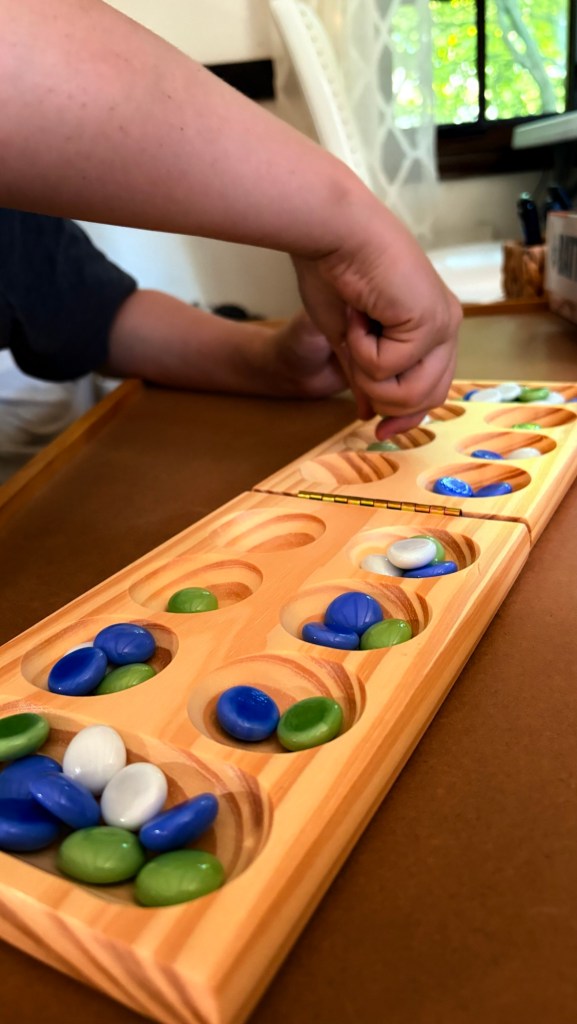
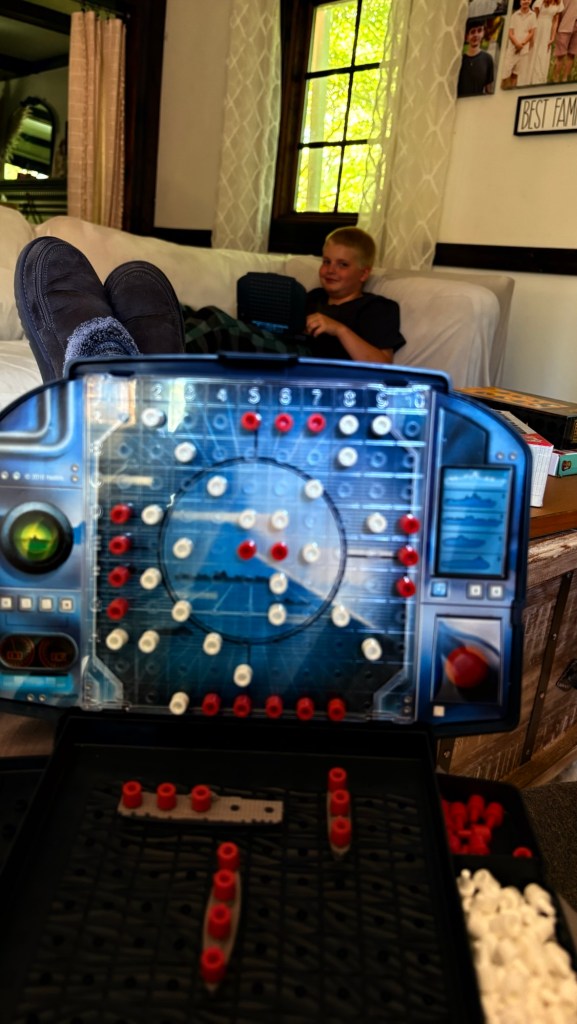
But today has been its own kind of glory—bundled in the cold, then thawing out in a warm, cozy house filled with the people I love. MarioKart championships, board games scattered across the table, quiet naps under soft blankets. It has been simple, chaotic, and beautiful.

I have more to be thankful for than words can hold. And as I count the blessings I can see—and the many I can’t—I’m lifting my gratitude upward. I pray you’re doing the same today, giving thanks to the One who fills our lives with mercies new every morning and goodness we could never deserve.

Happy Thanksgiving, friends. May your hearts be full and your eyes open to every grace He has poured out.

Friendship, Uncategorized

The Seasons of Staying

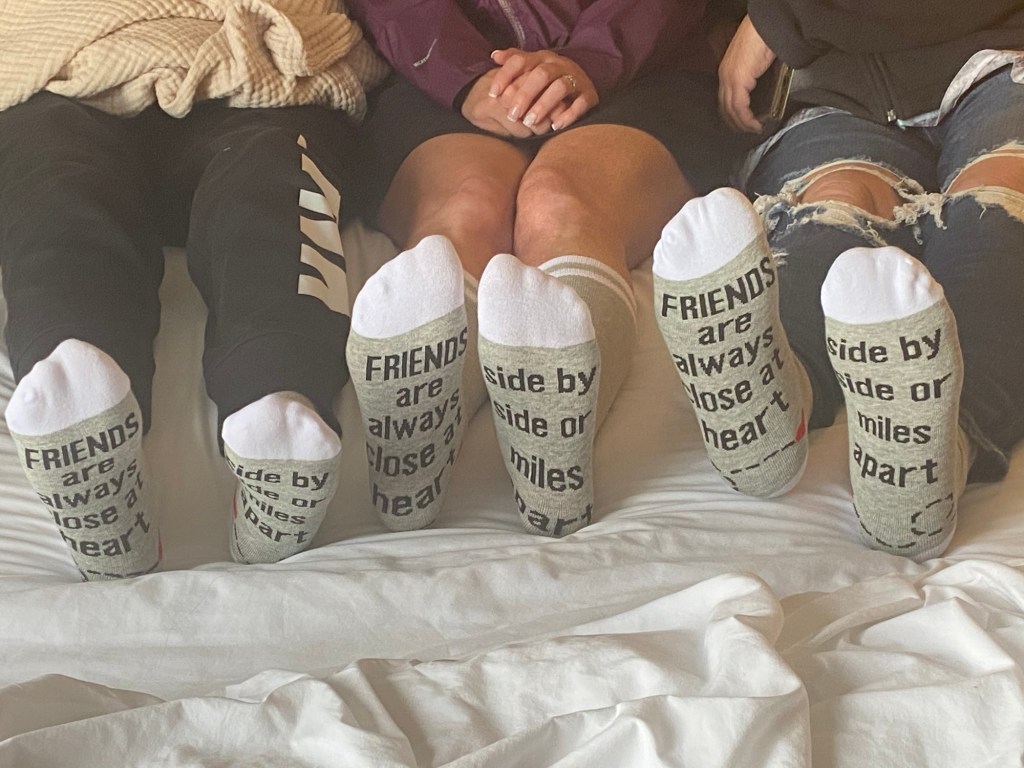
Being a friend of someone with terminal illness must be quite the roller coaster. I’ve had the privilege a few times, but never for so long a stretch of time as my illness has asked of my tribe. That in itself is a beautiful gift, but the cost of it is also not lost on me.

Being a friend of someone with terminal illness must be quite the roller coaster. I’ve had the privilege a few times, but never so long a stretch of time as my illness has asked of my tribe. That in itself is a beautiful gift, but the cost of it is also not lost on me.

There’s something both sacred and sorrowful about watching friendships move through the seasons when you are the one who is dying. In the beginning, the circle is wide — full of love and meals, visits and prayers, the kind of tender urgency that comes when people don’t yet know what to do but feel compelled to do something. It’s a holy flood of kindness, and it humbles you to your core.

But time, as it does, stretches. Months turn into years, and the edges of the circle shift. Some friends drift quietly into the background, not because they stopped caring, but because life resumes its relentless rhythm. Kids grow, careers change, and the crisis that once felt immediate now lives in the quieter corners of their awareness.

And honestly? I get it. I’ve been that friend before too — before this diagnosis rewrote my sense of time. I’ve meant to reach out and didn’t. I’ve avoided pain I didn’t know how to face. I’ve loved someone deeply and still failed to show up in the way I wish I had. So I hold that understanding now with open hands and no resentment, just a bittersweet ache that love sometimes outlasts proximity.

What’s left are the ones who stay through the long middle — not just the early crisis or the final goodbye, but the drawn-out, unpredictable middle where the reality of terminal illness stops being dramatic and just becomes life. They sit with me in the mundane. They ask the unglamorous questions. They know when to come close and when to give space. They’ve learned that faithfulness doesn’t always look like constant presence, but steady presence.

And then, there are those who come back — friends who circle in again after time away, sometimes awkwardly, often tenderly. Their return feels like mercy. It reminds me that love isn’t linear; it’s tidal. People ebb and flow in and out of each other’s lives, and that movement, too, can be grace.

I used to think loyalty meant never leaving. Now I think it means being willing to return.

So to my friends — those who have stayed, drifted, returned, or simply remembered me from afar — please know this: your love has carried me. Every text, every silence, every prayer whispered when you didn’t know what to say has mattered.

Illness has taught me that friendship isn’t measured in constant nearness but in the threads of care that remain, even when time and distance stretch them thin.

If I could sum it up, I’d say this: the seasons of friendship are not a sign of failure, but of humanity. And what a fragile, beautiful, sacred thing it is to be human together — even in the shadow of goodbye.

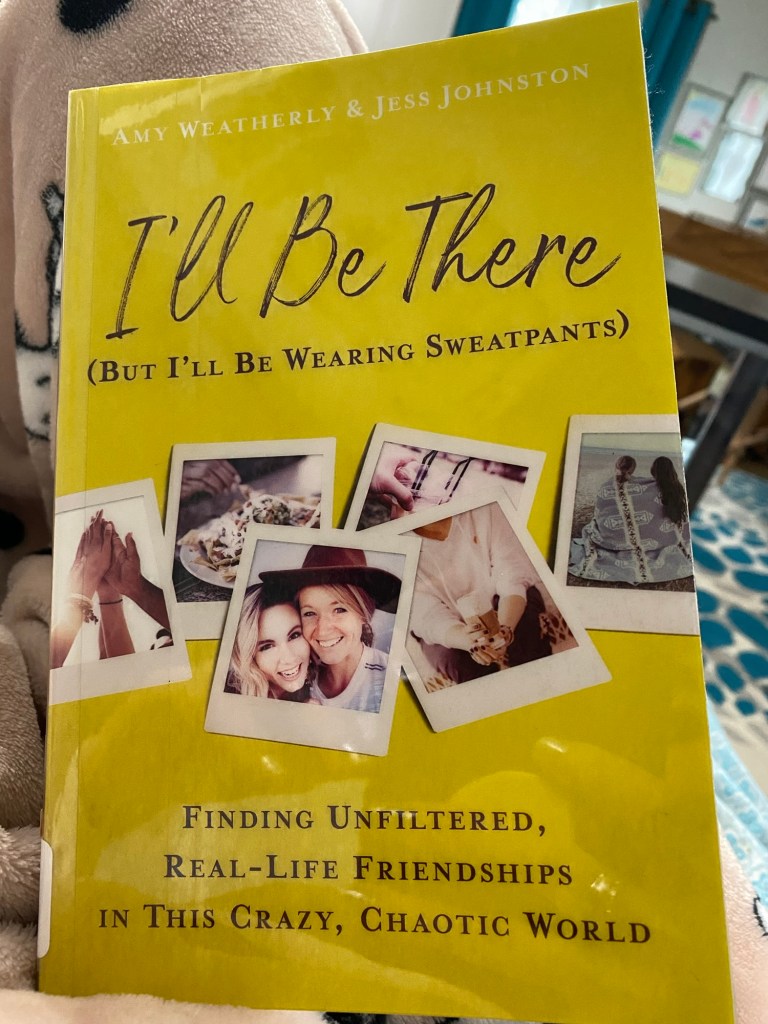
One of my all time favorite reads!

faith

Brave Was Never the Plan

I had a new nurse come visit me last week. He was honest, kind, and thorough — asking all the usual questions about my medical history; the twists and turns that brought me here. I’ve learned to tell that story in pieces now, almost like reading from a well-worn script. When I finished, he sat back in his chair and said softly, “You’re really brave.”

He said it again before he left. And I smiled, but inside I felt a strange ache. Because I don’t feel brave. Not even close.

Most days, I feel like I’m just hanging on for dear life — doing the next thing because there is no other choice. Take the medication. Show up for the appointment. Face the pain. Rest. Repeat. There’s nothing glamorous about it, and most of the time, it doesn’t feel like courage; it feels like survival. The kind of survival where you’re digging in your fingernails, white-knuckling hope like your life depends on it, because it does.

But maybe, just maybe, God sees it differently.

I think about how often Scripture tells us, “Do not be afraid.” It’s not because life is easy or because fear never knocks at our door — it’s because God promises to be with us in it. Maybe bravery isn’t the absence of fear or the strength to charge forward. Maybe it’s the quiet trust to take one trembling step at a time, believing that God’s hand is steadying us, even when our own knees are shaking.

There are days when my prayers are nothing more than whispered sighs — “Lord, help me through this hour.” There are nights when I’m too weary to pray at all, and all I can do is rest in the truth that the Spirit intercedes for me when I have no words left. And maybe that’s what real courage looks like: surrendering the illusion of strength and leaning instead into the grace that holds me together.

I don’t feel brave, but I am learning that bravery doesn’t always feel like bravery. Sometimes it looks like showing up. Sometimes it looks like tears. Sometimes it looks like still believing that God is good, even when life doesn’t feel good.

If someone calls me brave, maybe what they really see is the reflection of God’s faithfulness — the way He sustains a soul that should have fallen apart by now. I’m learning to take that as a quiet reminder: this story isn’t about how strong I am, but about how faithful He is.

So no, I don’t feel brave. But I keep going. And by God’s grace, that’s enough.

Gratitude

The Gift of Time

About a week ago I discovered my first real, here-to-stay gray hair. At about an inch and a half long, the silvery strand sparkled in the light, and I squeaked with delight. I have been waiting for this day!

It felt almost holy, that moment of noticing what the world often calls a flaw but what Scripture calls a crown. The Bible says, “Gray hair is a crown of glory; it is gained in a righteous life” (Proverbs 16:31). A strand of silver is not something to pluck away or hide in embarrassment—it’s a shimmer of honor, the whisper of years lived and stories carried, a reminder that time is a gift.

The world tells us that beauty belongs to the young, but God tells us that beauty deepens with age. Every laugh line is a history of joy. Every crease carries the memory of burdens borne and released. Every gray hair gleams with testimony: of lessons learned, of prayers prayed, of nights endured and mornings met with new mercies.

Aging is not the dimming of the light, but the soft glow of it spreading, warming, illuminating. It is not a loss—it is a gathering. We gather wisdom, we gather perspective, we gather gratitude for the fleetingness of days and the eternity that awaits beyond them.

To age is to live long enough to love more deeply, to forgive more freely, to see life with eyes unclouded by the urgency of youth. It is to carry within us the sacredness of experience, the sweetness of perspective, and the quiet strength of having endured.

So when I see that little silver thread sparkle in the mirror, I do not feel embarrassed. I feel crowned. Crowned with grace, crowned with wisdom, crowned with the reminder that my days are in His hands and that every year is a jewel added to the story He is writing through my life.

Fun with gray

Aging is not something to hide. It is something to honor. Something to embrace. Something to rejoice in.

Because every gray hair is not just a strand—it is a song of God’s faithfulness woven into us, shimmering with glory.

daily graces

The Most Difficult Gift

I love giving gifts, and I enjoy receiving them, yet I struggle to accept one of the greatest gifts offered to me; the gift of receiving. It is a humbling place to exist, needing others’ love and care, and I find it difficult at times. I have realized because of my love of giving that it takes far more grace to receive than it does to give.

After years of priding myself on my strength, being humble is difficult for me. It’s hard to ask for help. Do you find yourself agreeing with me? Yet we are all in need in one way or another; broken and struggling but putting on the best brave face we can muster just to prove we can go it alone.

In this long, loooooong season of needing to accept the help of others I find that the luster of having it all together is wearing thin. I see the depth of brokenness within me and around me, and I long to connect in my brokenness. I long to be known and to know the true hearts of others around me.

At my core I am a doer. A server, a giver, a wear-myself-down-to-nothing all in the name of love kind of girl. Accolades for me, right? What if I told you it’s just a ruse for my pride and need for control? Control that blares I’m not needy, I can do it myself, I don’t need anyone— unless someone needs /me/, and then I’m there.

I have spoken with enough people to know that I am not alone in this. Well, maybe I’m alone in admitting it, but I’m not alone in feeling it.

For 35 years I basked on the pedestal of being able-bodied, capable of doing anything that needed doing. I spent decades believing my purpose was to wear myself out pleasing those around me. I knew the truth, but it was easy to ignore when I had strength on my side.

Culture convinces us that our success is measured by our strength. It’s a bold-faced lie that what we are capable of is what we are loved for. This isn’t living in the truth of the gospel. Thankfully God is continually gracious to keep showing me the sin of my pride and need for control. He patiently loves me back to the foot of the cross and reminds me of my need to be needy and not just needed.

It took the stripping of my strength by this awful disease to expose this to me, and I still have to seek grace often because my heart’s bent is on proving myself instead of letting myself be loved in my neediness. Jesus is breaking me of my strength and showing me the grace to be found in embracing my weakness, and the joy that it gives others who want to help.

I hope that you can find this truth in your own life. Don’t settle for being loved for your abilities instead of being loved for your heart. Resist the temptation to keep yourself busy in order to feel accepted. Look for the ways to slow and find your significance in something more real. Then notice how you find peace and rest in giving others the gift of helping.