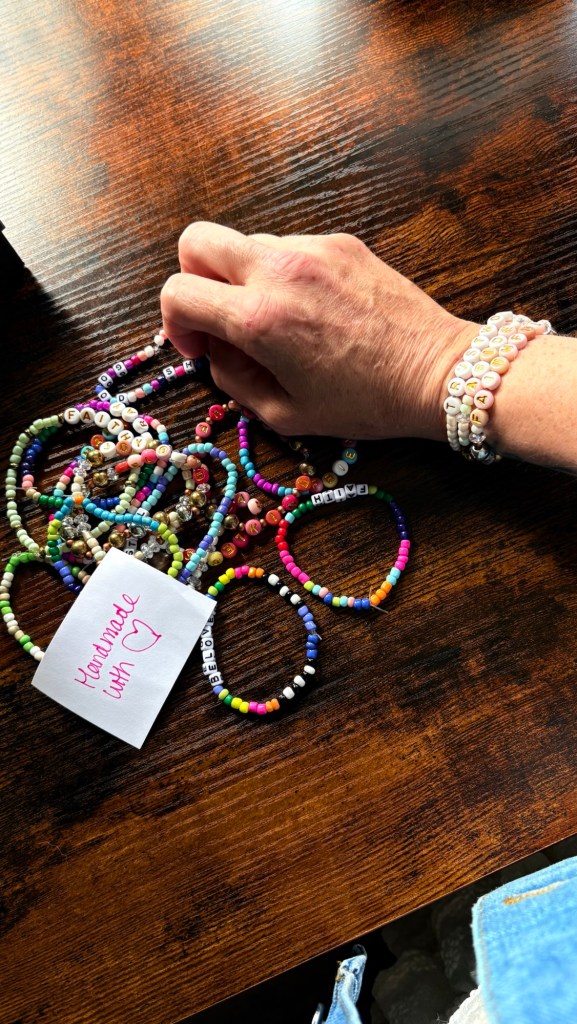
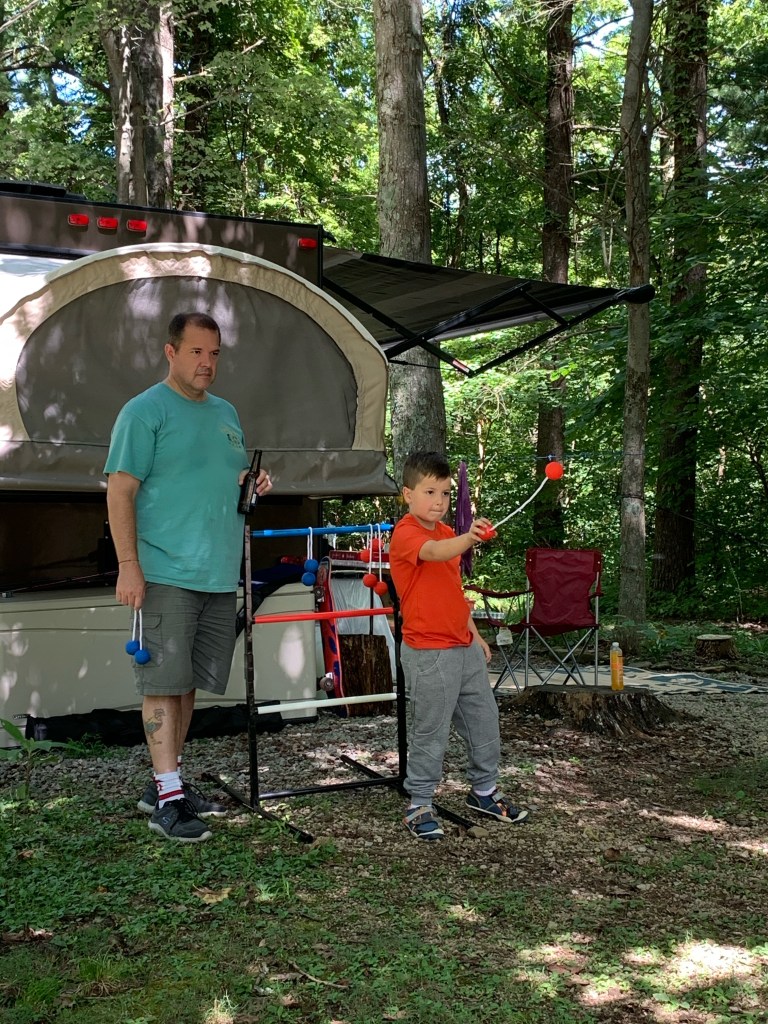
This week brought uncharted territory; fertile ground for anxiety, fear, worry, and doubt. Yet in the undertow of circumstances far beyond my control, the steady hum of peace and quiet miracles is what left the boldest impression on my heart. Proof again that looking for God’s grace to show up even in the hardest, messiest, ugliest places will never disappoint.
It is so easy to let the noise of the unknown drown out the gentle ways we are being held. When the landscape of my life shifts overnight, my natural instinct is to scramble for control, to brace for the impact of worst-case scenarios. Intend to fixate on the storm itself rather than the anchor holding me fast. But when I slowed my breathing and adjusted my gaze, the shift in my perspective was immediate.
Grace didn’t wait for the mess to be cleaned up before showing up; it met me right in the middle of it. It appeared in the faithful prayers of an army of friends, the perfect provision that I initially mistook for inconvenience, the intentional timing of lyrics and scriptures, and the small, unmistakable moments where an unexplained calm settled over my soul. These weren’t loud, earth-shattering interventions—they were quiet miracles. Whispers reminding me that even when life feels completely unpredictable, God remains unfailingly constant.
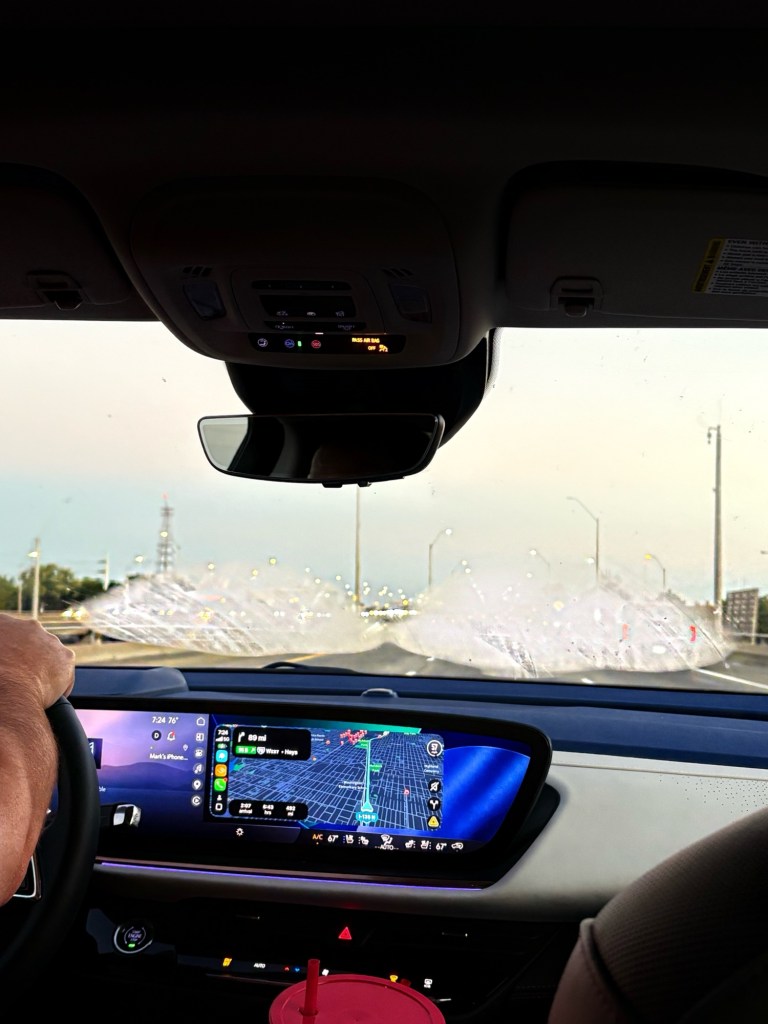
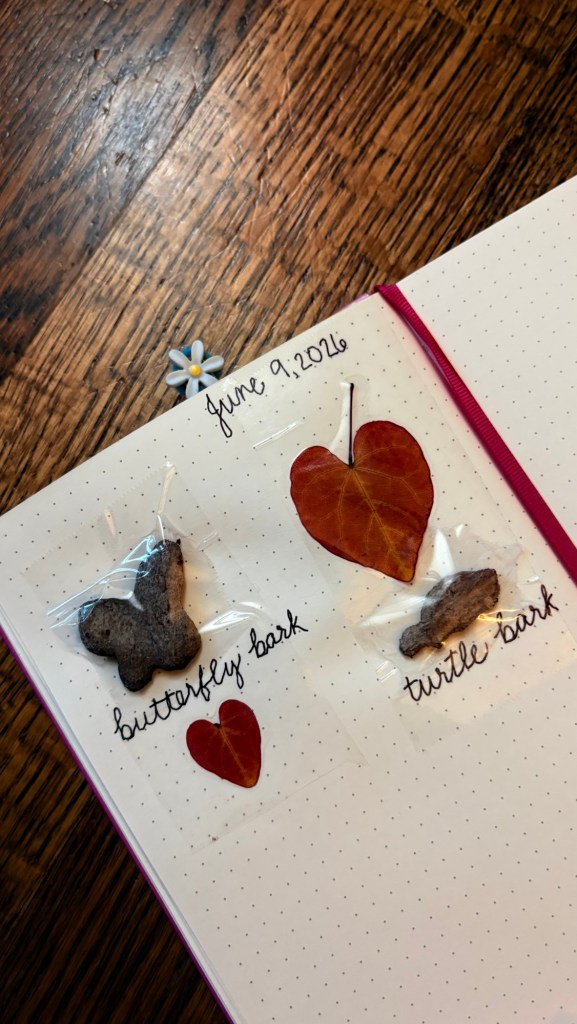
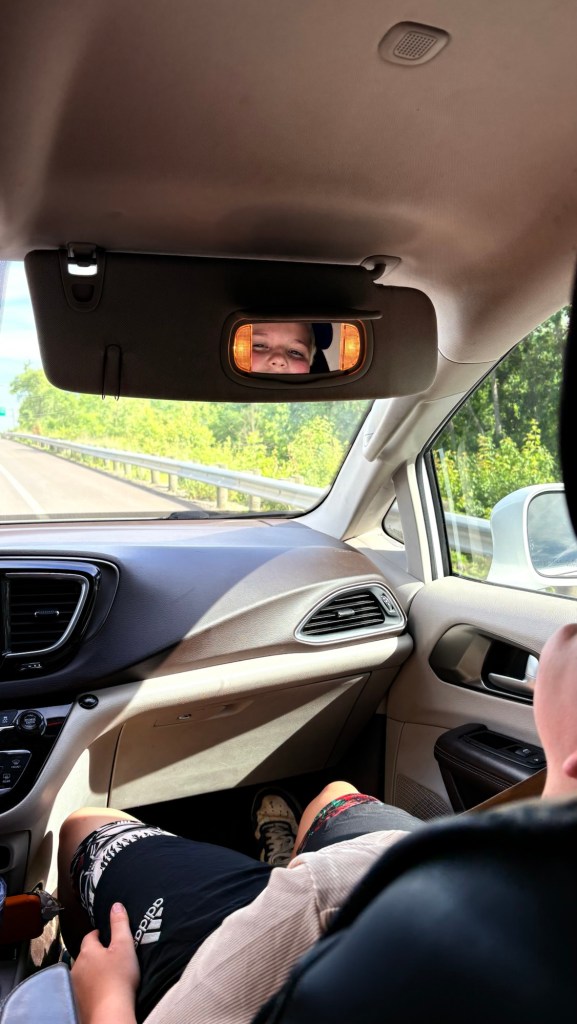
Angel-shaped fog on the windshield
Looking back on these past seven days, I realize that peace isn’t the absence of trouble—it’s the presence of God within it.
If you find yourself navigating your own uncharted territory right now—if you are carrying worry that feels too heavy or facing a situation you cannot fix—I encourage you to lift your head. Don’t look for the outcome you think you need; look for the grace that is already there. Search for it in the small things, the ugly places, and the messy moments, and then remember it. Write it down, snap a picture, tell a friend. I promise you, you won’t have to look far.
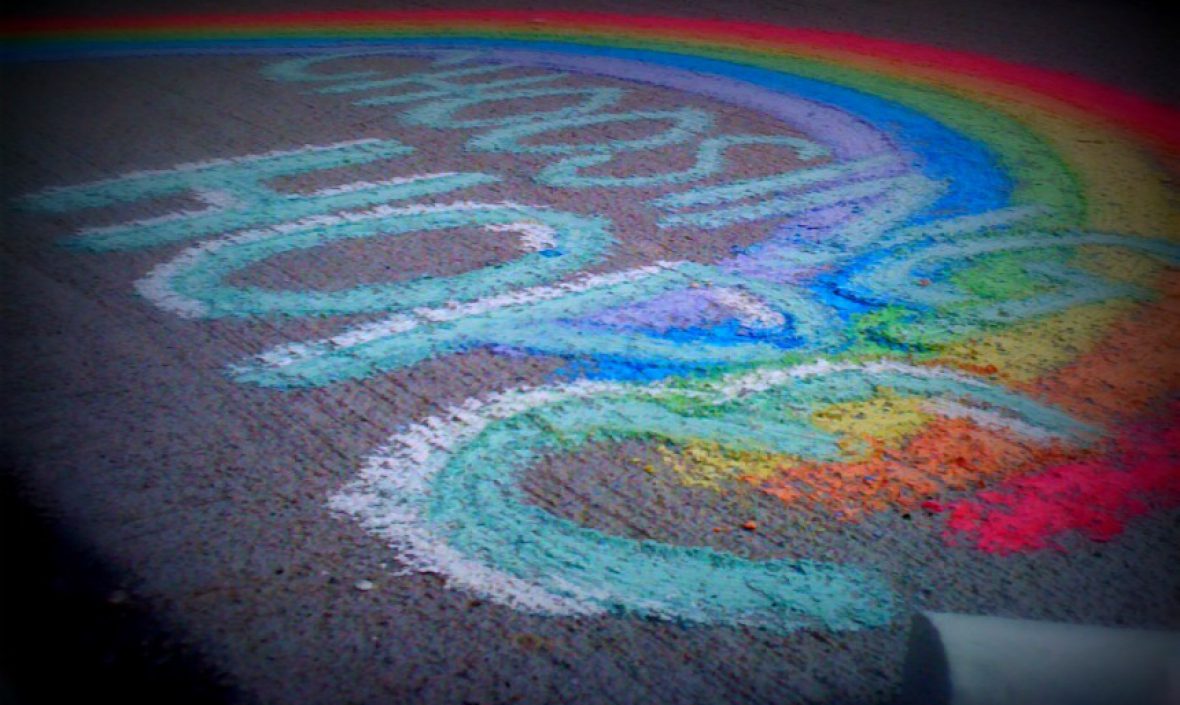
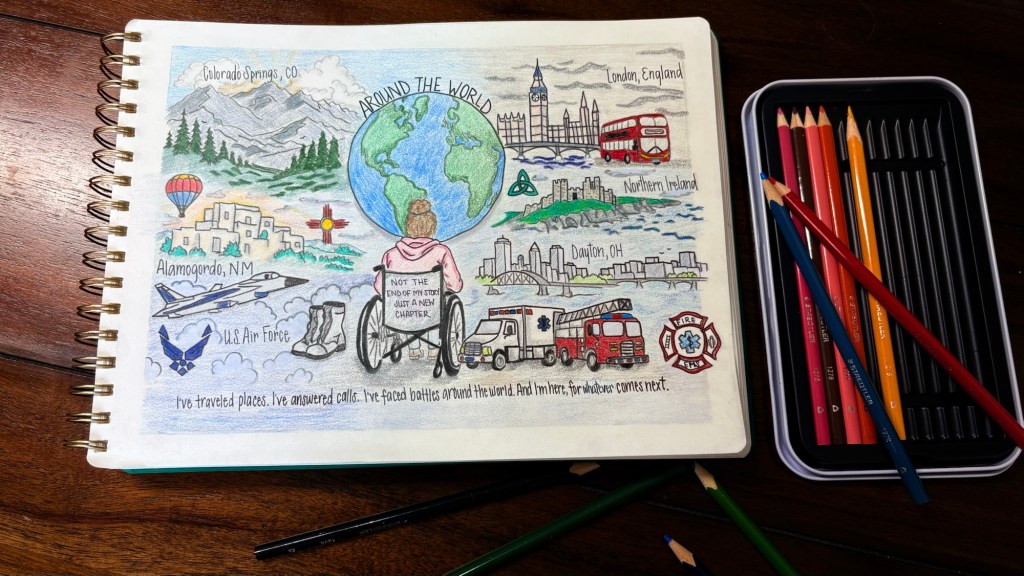
Hey friends, I have something you can help with… I entered an art contest, and one of the categories is “fan favorite,” which is decided by the number of votes a piece of artwork receives. If you would be inclined…
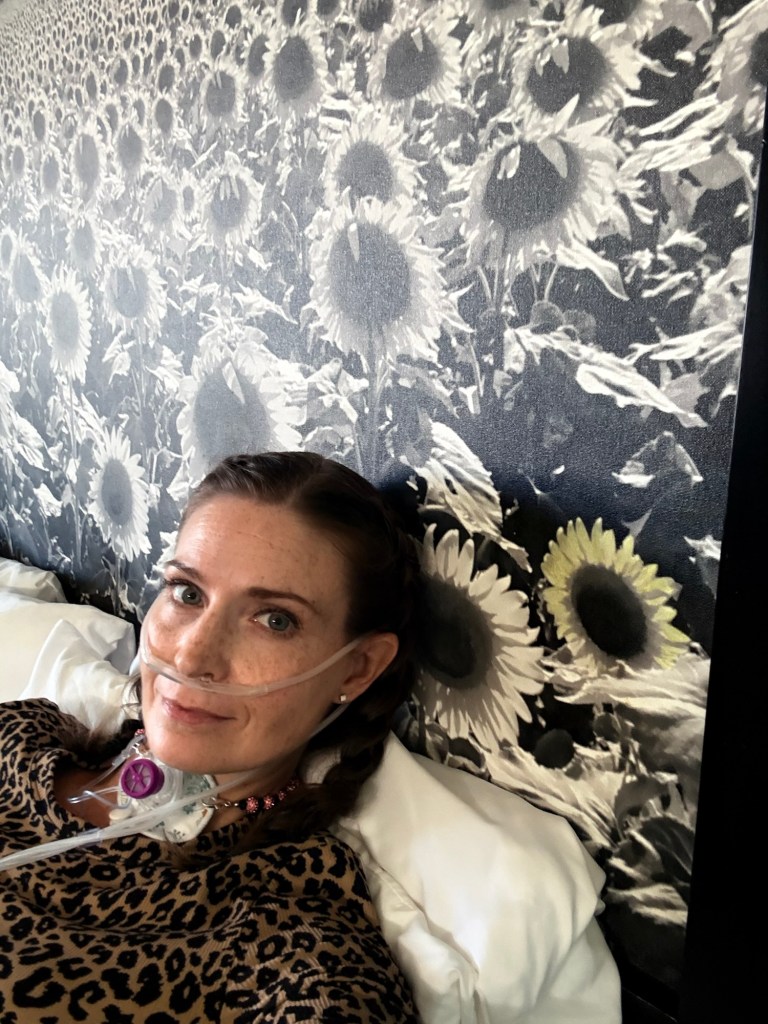
As my illness has not so quietly crept into new areas, the clear, trustworthiness of my world that was semi-predictable has faded as well. Despite what my energetic heart and mind have had planned, my body is simply not getting the message, often doing the opposite of what I’m asking it to. This was especially evident this past week.
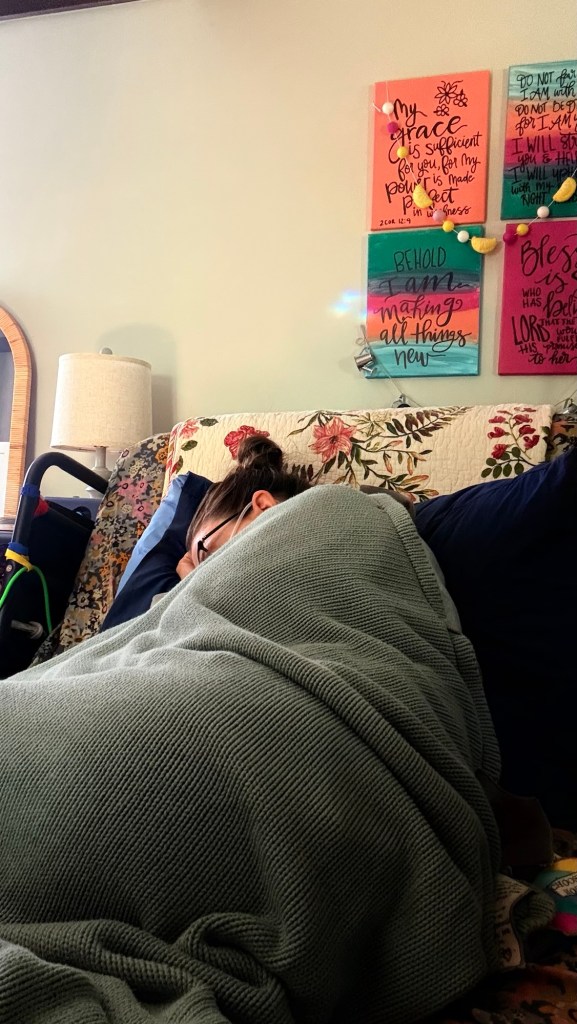
Sunday I slept through most of the sermon and parts of worship. Again. It had been a tiring week—being in the middle of a 2 week stretch where my husband was traveling, but I honestly felt like I got a decent night’s sleep on Saturday. My fatigue continued though, and I found myself either missing things, or having to cancel plans because my body was determined to sleep more whether or not I was at an event or behind the wheel.
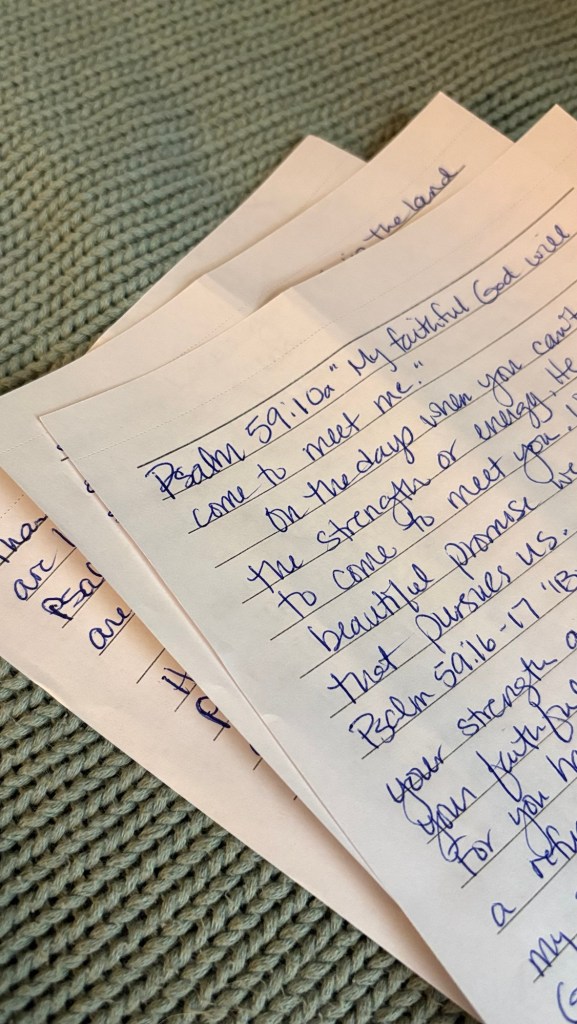
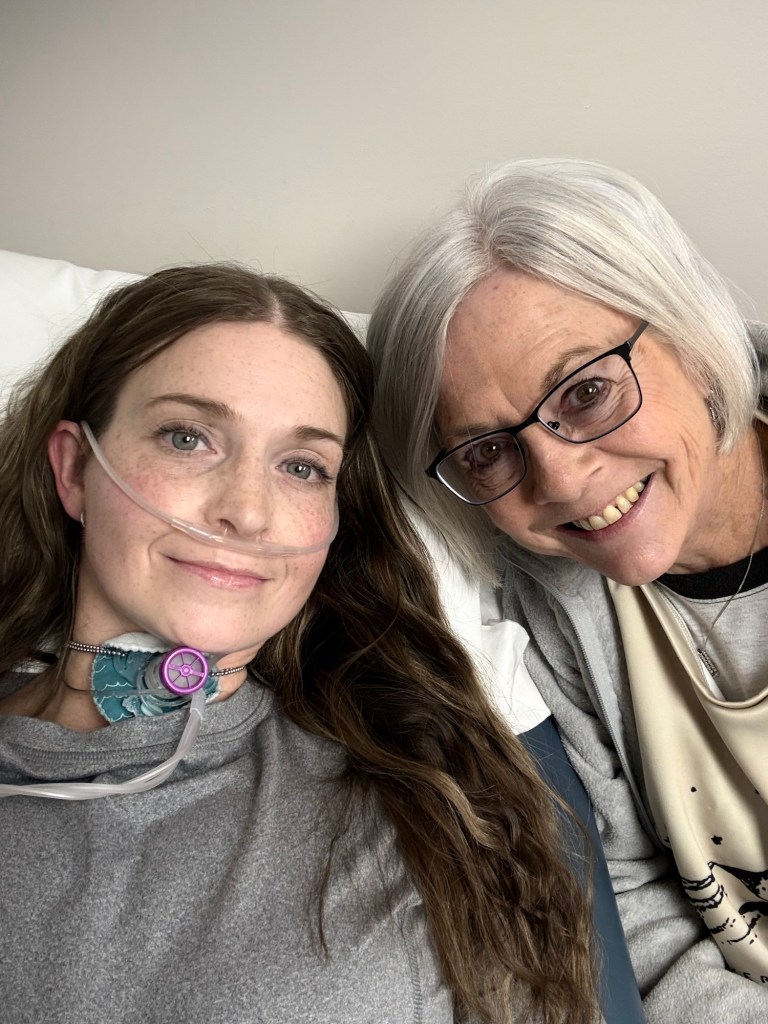
Tuesday a dear friend came over to visit. After just a few minutes chatting I dozed right off mid conversation . I jostled awake shortly, and profusely apologized for my rudeness. My friend was as gracious as could be. The next thing I knew I awoke a significant time later to my friend still sitting at my bedside. She had brought her Bible, and as she read she took notes that she compiled into a beautiful and encouraging 3 page letter that she gifted to me on her way out. I was sad and upset that I had missed out on visiting with her, but her words were a gift to my heart.
“Please don’t be embarrassed. It was an honor you let me in today and I enjoyed the time by your side even if it was a quieter visit. Love you!”
I had another friend visit recently with her kids in tow. The littles sat at the dining table and kept busy while their mama and I visited. I didn’t even realize I was sleepy until I startled awake to see her hustling her littles quietly out the front door.
That moment sat heavy with me long after the door shut. Not because she was unkind—she wasn’t. She was trying to be considerate. Trying not to embarrass me. Trying not to wake me. But what I woke with was the reality of it all. The quietness of it. The careful escape. The unspoken understanding that the visit had suddenly become awkward and there was no graceful way to recover it.
Illness has a way of turning normal interactions into strange little social negotiations nobody knows how to navigate. That may be one of the loneliest parts of this illness for me lately—not just the symptoms themselves, but the way they alter the atmosphere in a room. The way people start adjusting around me. Whispering around me. Watching me carefully. Exiting cautiously.
I know the people who love me are doing their best. I know they aren’t judging me cruelly. But it is still difficult to repeatedly become the unexpected thing everyone has to accommodate. I miss being easy to be around.
My friend who stayed while I slept gave me a gift I didn’t even know I needed; the gift of presence.
Not fixing. Not rescuing. Not trying to force the moment to be less uncomfortable than it was. Just staying.
There is something profoundly Christlike about that kind of love. The kind that does not flee weakness or rush past suffering, but settles beside it without demanding it hurry up and become easier.
I think so often I have imagined God’s love primarily through the lens of intervention—that if He loved me, surely He would fix this. Relieve this. Wake me up from this exhausting fog my body keeps pulling me into. But lately I am beginning to wonder if sometimes His love looks less like removal and more like companionship. A God who remains.
A God who is not embarrassed by my limitations. Not irritated by my weakness. Not awkwardly slipping out the front door because He doesn’t know what to do with me.A God who stays at the bedside.
Maybe that is why the presence of faithful friends has ministered to me so deeply in this season. Because every quiet act of patience, every unhurried moment, every person willing to sit in the strangeness of this illness without recoiling from it—they are reflecting Him back to me in ways I desperately need.
Not every act of love looks dramatic. Sometimes holiness looks like simply staying when it would be easier to leave.
When I opened my arms wide to welcome in a community that would keep us afloat on the days we need it, and hold us up on the days we are too frail, I also opened my arms to a whole range of perspectives, experiences, and opinions. It stands to reason that with so many different brush strokes making up my tribe, there will sometimes be tension when considering my situation.
I am a terminally ill young(ish) mom, wife, medical professional, friend, and relative with an awful lot of people who care deeply about me and want the best for me. And each of those “best wishes” is shaped by that person’s own knowledge, fears, and life experiences. I’m genuinely grateful for that—it means no stone is left unturned, no possibility ignored, no concern left unspoken. That kind of care is a gift.
But if I’m honest, it can also be a lot to carry.
I have been offered the full spectrum of doctors’ names and specialties, an impressive number of healing stories shared from personal experience, and a wide array of remedies that are “sure to help”—from expensive teas and elaborate oils to unconventional rituals and everything in between. Each suggestion is given with love. I know that. I feel that.
And still… it can be overwhelming.
Because underneath all of it is an unspoken assumption: that I might not be doing enough, considering enough, or protecting myself well enough.
The truth is, I am living inside this body every single day. I am the one weighing the risks, measuring the energy costs, and deciding what is worth it and what is not. I am constantly calculating—what will give me more life, and what will simply take more from me.
I need the space to do that.
I need the freedom to say, “Thank you, but no,” without feeling like I am letting someone down or missing something critical. I need permission—not from others, but from myself—to trust my own judgment.
Because I am not passive in this. I am not unaware. I am not neglecting my care.
I am choosing, very intentionally, how I spend what I have.
Sometimes that will look like pursuing treatment. Sometimes it will look like resting. Sometimes it will look like saying yes to something that feels worth the risk, and other times it will look like protecting my peace at all costs.
All of those choices are valid.
So if you are someone who loves me—and I know you are—please hear this gently: your care means everything to me. Your suggestions come from a place of compassion, and I don’t take that lightly.
But the most supportive thing you can offer me is trust.
Trust that I am listening.
Trust that I am thinking.
Trust that I am choosing with both wisdom and intention.
And trust that I know, better than anyone else, what my body and my life require in this season.
Walk with me. Sit with me. Pray for me. Laugh with me.
But please, let me lead when it comes to my own limits.
If you watched my video this week about getting new glasses, you undoubtedly noticed its lighthearted tone . I try to add an underscore of humor to all of my videos there, since the goal is education and awareness about MSA, not to garner pity or sad feelings from people. In reality, this latest change for me has been a little more heavy than humorous.
It started when I noticed my vision had pretty rapidly gotten very blurry. I wondered if it was a side effect of one of my medications, or if the slight glasses prescription I already have needed to be updated. When I went in for an eye exam, I learned it was neither. The reason for the profound vision loss I was experiencing was because my disease has weakened the muscles controlling my eyes so much that the blurriness I have been noticing is actually me seeing double.
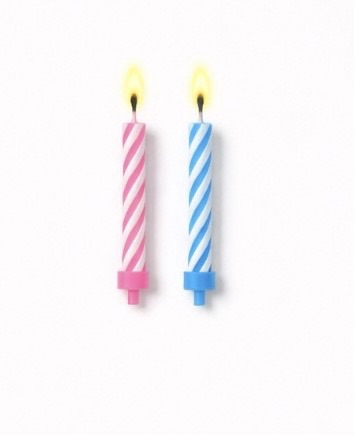
The doctor that saw me that day was so compassionate and kind-hearted; I could tell he truly cared about my situation and wanted the best outcome possible for me. I sat staring through the giant robot-thingie while he dialed in lens after lens, trying to make it strong enough to correct my vision. It got better— the two birthday candles that started a few hand widths apart from each other moved in closer and closer, but even at top strength the candles never merged into one.
So I left the office with a new pair of thick bifocal glasses, feeling very much like the rug had been yanked out from under me by this new development that had not even been on my radar. And truth be told, even with my new specs there is a lot that has been lost as far as what I can see in detail, which in turn affects what I can do.
It was a disheartening blow at first, that left me wondering what I had to offer now. My Etsy business would be affected, my art, my writing… what was left for me to give to the people I love and care about?
For a little while, my mind went to the same place it always used to go when something was taken away from me: What am I still useful for?
Illness has a way of asking that question over and over again. Every new limitation feels like another subtraction sign—another thing crossed off the list of what you once could do.
And if I’m honest, I realized something in the middle of that discouragement: somewhere along the way, I had quietly started believing that my value to God and to other people was tied to my abilities. My productivity. My output. What I could make, build, write, organize, or contribute.
But that has never actually been the way God works.
God never needed my abilities.
He never needed my Etsy shop, or my artwork, or my words, or my capacity to juggle responsibilities and keep producing things that look impressive on the outside. None of those things were ever the offering He was asking for.
What He wanted was always much simpler—and much harder.
He wanted my heart.
When I started reading through Scripture again with this in mind, it was everywhere. Over and over, God makes it clear that He is not impressed with human strength or skill. In fact, He seems to go out of His way to work through weakness.
He chose shepherd boys, stutterers, widows with two coins, fishermen with no education, and people who openly admitted they were afraid and inadequate. Again and again, God reduced the resources so that no one could mistake where the power came from.
Which means my declining abilities are not a surprise to Him.
They don’t disqualify me.
If anything, they strip away the illusion that I ever had something impressive to bring to the table in the first place.
The truth is that my offering was never supposed to be what I could do.
My offering was always supposed to be me.
My trust.
My willingness.
My obedience in whatever small space I’m given today.
The older I get and the more this disease takes, the more God keeps narrowing things down to that single point: Will you still give me your heart when the things you used to rely on are gone?
And the surprising thing is that there is actually a lot of freedom in that question.
Because if God only wanted my abilities, I would eventually fail Him. Bodies break. Energy fades. Vision blurs. Talents come and go.
But if what He wants is my heart, that is something illness cannot take away.
Even on the days when my eyes won’t cooperate, when the candles refuse to merge into one clear image, when I can’t do half the things I used to do… I still have something to give.
I can still choose to trust Him.
I can still choose to love people well.
I can still offer the small, quiet faithfulness of a life surrendered.
And maybe that was the lesson hiding inside this unexpected trip to the eye doctor.
My vision may be fading in ways I never anticipated.
But in a strange way, the picture itself is becoming clearer.
Fifteen feels big. It feels loud and bright and full of opinions and music and friends and late nights in the kitchen. Fifteen feels like learning to drive soon. Like strong emotions and stronger convictions. Like figuring out who you are. And that precious part of mother/daughter relationships where you become friends who enjoy each other’s company.
And I don’t get to know who you would have been.
That’s the ache.
I don’t know if you would have loved sports or books. I don’t know if you would have been bold or quiet, stubborn or soft. I don’t know what your laugh would sound like as a teenager, or what kind of friends you would choose, or whether you would roll your eyes at me when I tried to hug you in front of them.
There is a particular grief in the unknown.
When you died at nearly 5 months old, I grieved the baby in my arms. But as the years pass, I grieve the girl you never got to become. The birthdays that don’t come with cakes. The school pictures that were never taken. The conversations we will never have on this side of heaven.
And yet — this is not a hopeless day.
Because while I don’t know who you would have been here, I know exactly where you are.
You are not frozen at four months old. You are not missing out. You are not wandering or waiting or wishing for what might have been.
You are fully alive in the presence of Jesus.
You are safe. Whole. Held.
There is a security in that. A steadying under the ache. My arms were only meant to hold you for a short time. His were always meant to hold you forever.
Sometimes people ask how I reconcile the grief with the faith. The truth is, I don’t reconcile it. I carry both. I carry the longing to see your face at fifteen, and I carry the unshakable hope that the first face you see every day is the face of our Lord.
Scripture tells us that to be absent from the body is to be present with Him. That promise has been an anchor for me. Not a cliché. Not a platitude. An anchor.
I still wonder about you. I still imagine you. I still feel that flicker of curiosity about the young woman you might have been.
But I don’t have to wonder about your eternity.
And that changes everything.
Today I will probably cry. I will probably smile at memories of your baby cheeks and the way your tiny hand wrapped around my finger. I will probably whisper “happy birthday” into the quiet.
Fifteen.
I love you just as fiercely as I did the day you were born. That love did not shrink with your lifespan. It has stretched across years and heaven itself.
One day, there will be no more wondering. No more imagining. No more “what if.”
Only reunion.
Until then, I trust the One who loves you even more than I do.
Happy birthday, my girl. You are deeply missed. And you are eternally secure.
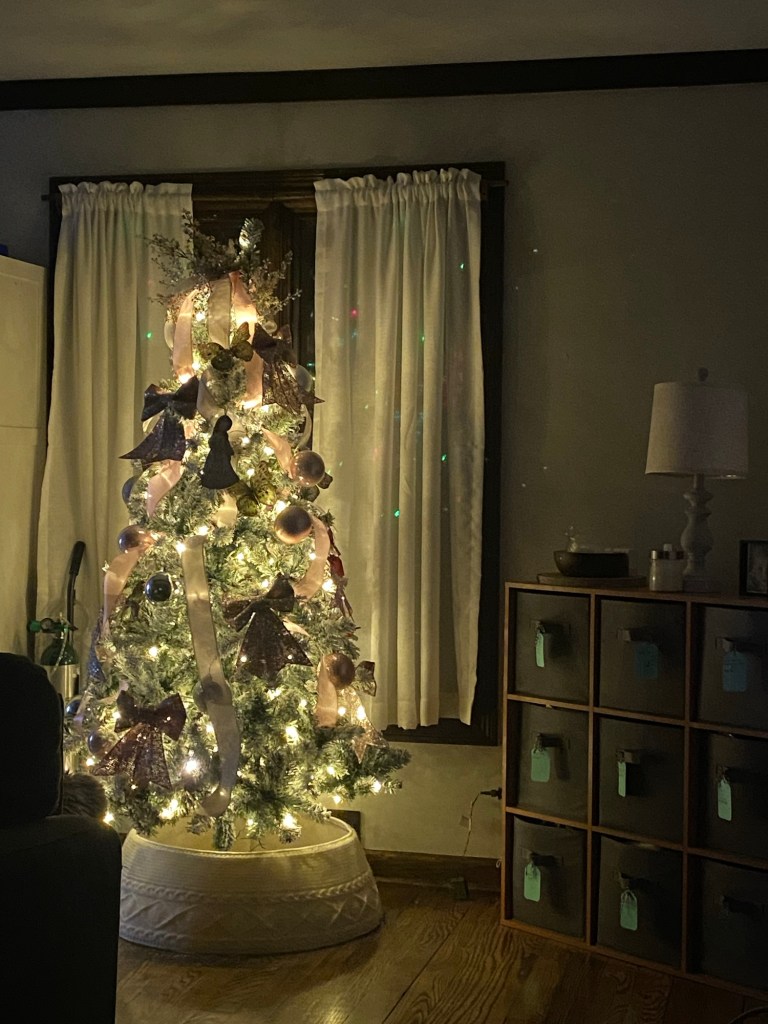
Last night my son and I laid near the soft glow of the Christmas tree, and talked as we have many nights at bedtime. We talked about all the typical things; what the bullies said to him at school today, why of all the people in the world did God allow me to be sick, and will the doctors tell us ahead of time when I am about to lose my voice, or will it just disappear without warning. I walked him through the emotions he feels about each of these things, and then we moved on through our bedtime routines.
It was after he was quiet for the night that it hit me how abnormal our normal is. I thought about my friends around town also tucking their littles in for the night, but their bedside conversations being about things like vacation plans, what they want in their lunch tomorrow, or what park or fun store they should visit after school the next day.
The unfairness rose quickly—that our conversations are rarely frivolous, that heaviness so often sits between our words. But as I lingered in the comparison, gratitude surprised me. I am not who I once was, and I’m thankful for that. This life has trained my eyes to notice what is delicate and fleeting, like the fine frost etched along the glass. The former version of me, busy and strong, would have overlooked it all.
I lingered by the lights that night before bed. Soaking in their soft, twinkly glow. Inhaling the last whiffs of an evergreen candle burned earlier in the evening. And in that quiet, I realized that this is how God has been teaching me to live now—slowly, attentively, reverently. My life has been narrowed in many ways, but it has also been clarified. When your world gets smaller, the meaningful things grow louder. The sacred becomes harder to ignore.
I don’t wish this road on anyone, least of all my child. I would give anything to lighten what he has to carry, to let him worry about ball court drama instead of disease progression. And yet, I can see how tender his heart has become. How perceptive. How brave. He asks questions some adults avoid for decades. He feels deeply, and he is learning that feelings— even the heavy ones— are survivable when they are shared.
Our conversations may not be light, but they are honest. They are full of connection. They are full of presence. There is a strange gift in knowing that tonight matters. That this voice, this body, this moment is not guaranteed tomorrow. It presses love into sharper focus.
As I finally turned off the tree and made my way to bed, I carried both grief and gratitude with me. Grief for the ease we’ve lost. Gratitude for the depth we’ve gained. I don’t think one cancels out the other. I think they coexist, braided together, teaching me how to hold joy without naivety and sorrow without despair.
This is not the life I would have chosen. But it is the life I’ve been given. And within it—between bedtime prayers and flickering lights, between hard questions and small mercies—there is still so much beauty to behold.
There’s a sacredness to suffering that not everyone understands.
When someone is walking through the deep waters—when every breath feels borrowed and every day is held together by grace—questions can become sharp without ever meaning to be. Have they given you a timeline? What treatments are they trying next? How bad has it gotten? Have they told you when they expect you to die?
Some of those seem atrocious, but they are questions we have actually answered had to field at one time or another. Sometimes these questions slip out clothed as concern, but they land like cold hands on tender skin.
Curiosity is not the same as caring. Curiosity wants information. Caring wants presence. Curiosity circles around pain to peer inside. Caring steps into the shadows and sits down beside you. Curiosity tries to relieve its own unease. Caring is willing to feel uncomfortable just so you don’t feel alone.
I’ve learned there is a holy difference.
I don’t mind sharing pieces of my journey—there is beauty, even here, and God’s fingerprints are everywhere. But when the conversation turns to timelines for my dying or details of treatments that stretch my limits just to endure… that crosses into a territory my soul guards carefully. It’s not because I’m ashamed or afraid. It’s because this is holy ground for me and my family. We are living it, breathing it, praying through it. I am learning to trust God in the dark, and trust is fragile when handled carelessly.
What I welcome—what I desperately treasure—are those who choose presence over answers.
The ones who say, “I’m here.”
The ones who quietly hold space when the tears come.
The ones who don’t need to know the forecast of my future to love me faithfully in my present. The ones who walk with us without needing to understand every detail of the valley. This is the love that looks like Christ.
He never demanded explanations from the suffering. He didn’t ask the bleeding woman for her medical history or the blind man for an exact timeline of his decline. He simply came close. He touched. He healed. He stayed.
He showed us that compassion doesn’t interrogate—it accompanies.
And so we lean into the nearness of God and into the arms of those who reflect Him, the ones who simply show up. The ones who see us instead of studying us. The ones who offer presence instead of probing questions.
If you want to walk beside me, you don’t need to understand every piece of what’s happening. You don’t need updates or timelines. You don’t need the painful details.
You just need a willing heart and a steady step.
Sit with me. Pray with me. Laugh with me. Hold hope with me when I’m tired. Remind me that God is still good, still here, still leading us home.
Curiosity might reach for facts, but caring reaches for hands.
And in this season, hands—and hearts—are what hold me up.