Fatal Illness

Weight I Wasn’t Meant to Carry

This week a friend stopped by with her baby whom I hadn’t had the chance to meet yet. I reached out my arms to hold her, probably more out of habit and an illusion of normalcy than having actually thought it through. I kept both arms wrapped around her body snuggly, making sure she was secure despite my lack of muscle strength. After a few minutes, when I felt my arms begin to tire, I handed her back to her mom.

Later that day I had to register for an appointment at the hospital that required me to converse with a remote employee through video, and we spoke to each other through a telephone line. Nearly halfway through the process as I held the plastic phone receiver to my ear I thought I wouldn’t be able to finish due to the shaking and fatigue in my arm. It felt like I had maxed out on pushups at the gym that day, only all I had done was 5 minutes of baby cuddling.

When I tried to explain these events to people in my life and express the fear and frustration it made me feel, I was largely met with the awkwardness of them not knowing what to say. My unmet, yet unspoken expectations led to uneasy silence and a longing to be understood.

As much as I thought and hoped this was an isolated event from pushing my arms beyond their comfort level, I have discovered a more unsettling trend. My arms continue to struggle to keep up. Folding laundry proves to be a feat of endurance, frequent breaks, and deciding pj’s will live just fine rumpled in the drawer instead of neatly folded. Holding my phone to my ear feels like a test of wills, and even typing out text messages brings the hot burn of fatigue and necessary rests.

I haven’t pulled out any art supplies in weeks now; the promise of fatigue coupled with the effort it takes just to get started has sadly been greater than the joy of creating. It feels like watching pieces of myself drift out to sea while I stand on the shoreline, completely unable to swim out and bring them back.
When your body begins to trade away simple abilities—things you took for granted just yesterday—it is easy to feel entirely abandoned. We live in a world that praises strength, endurance, and productivity. When those crumble, we wonder where God fits into the weakness. Why does a God who is capable of sustaining galaxies allow holding a phone or folding a shirt to feel like an insurmountable mountain?
In the uncomfortable silence of my own changing reality, I turned to Scripture looking for a hero, but instead, I found a scene of profound human weakness. During Israel’s battle against the Amalekites in Exodus, Moses stood on top of a hill holding up the staff of God. As long as his hands were raised, Israel prevailed; whenever he lowered them, they faltered. But Moses was human. The story reads, “When Moses’ hands grew tired, they took a stone and put it under him and he sat on it. Aaron and Hur held his hands up—one on one side, one on the other—so that his hands remained steady till sunset.”

We often preach about faith moving mountains, but here, holiness looked like needing a rock to sit on and two friends to carry the weight of tired arms. I’ve spent days frustrated that my arms couldn’t hold a baby or a telephone receiver. But God has been gently showing me two powerful truths in this valley.

The first is that His grace is perfected in our actual limits, not our imagined strength. Paul wrote in 2 Corinthians that the Lord told him, “My grace is sufficient for you, for my power is made perfect in weakness.” God does not require us to put on a brave face or pretend we are stronger than we are. When my arms shake, His strength isn’t diminished—it is highlighted. My worth was never tied to my physical endurance, my folded laundry, or my artistic output. It was, and always is, anchored in His love.a

The second truth I am being reminded of is that we were never meant to carry the weight alone. When people in my life didn’t know what to say, it wasn’t because they didn’t care; it was because physical suffering is uncomfortable to witness. But just like Moses needed Aaron and Hur, we need grace-givers who will sit with us in the silence, who don’t need us to be “fixed” to love us, and who are willing to hold up our arms when we simply cannot. And even when human understanding falls short, Jesus remains the One who understands our every weakness, leaning in closer rather than pulling away.

If you are standing in a season where your capacity feels diminished—whether through chronic illness, burnout, or quiet suffering—hear this today: You are allowed to grieve what you’ve lost. You are allowed to leave the clothes rumpled in the drawer.

God is not waiting for you to recover your strength before He draws near to you. He meets you right here in the fatigue, in the quiet frustration, and in the empty hands. You don’t have to carry it all. When our strength runs out, His grace takes over.
faith

Grace in the Gray

I have learned much about anxiety this week. How it makes the entire body buzz with an itch that won’t be scratched. How pulsing panic sits me bolt-awake from the depth of refreshing sleep. How I can’t organize my thoughts or talk myself down from the war within me.

The vibration of my phone alerts me of words I thought I was ready to take in, but it turns out I wasn’t. Immediately I croak the words out, white-hot tears burning my cheeks, finger slicing the air as it jabs toward Heaven. “I know I said to lead me, but I don’t like this one bit. I’m angry, and I’m terrified. I don’t want what You are giving me to carry. But… I trust you. And I’ll listen… and I’ll follow… You just better pick up the pieces.”

And the next thought after my white-hot rage is the words of a familiar hymn, and I draw breath as deep as I can so my quavering voice can scratch out the words of the melody:

“When peace like a river attendeth my way, when sorrows like sea billows roll; whatever my lot thou hast taught me to say, it is well, it is well with my soul.”

Anxiety means something inside of me needs to be felt. It’s an SOS telling me that I have been avoiding important emotions that I have not fully faced yet. So I pause and make space for the actual feelings to seep in. When I allow myself to feel I recognize… I’m not anxious, I’m sad. I’m sad at the weight of this week; at all the broken and hurting pieces that have jumbled their way across these days socked in by the thundering gray skies.

So through my singing I let the tears fall, not as a sign of defeat, but as a release. I let the sadness wash over me, untangling itself from the frantic knot of panic. The gray skies outside haven’t cleared yet, and my situation has not magically changed. But the war inside my chest has begun to quiet down.

Surrender doesn’t mean I suddenly love the burdens I’ve been given to carry. It just means I’m choosing not to carry them alone. In admitting my grief, I find a strange kind of ground beneath my feet; a place where faith and real, messy human emotion can finally sit together in the quiet.

If you find yourself in the storm today, buzzing with an anxiety you can’t shake, try leaning into the quiet beneath the noise. Stop running from the itch. Name the real emotion waiting for you under the fear—whether it’s heartbreak, anger, or deep exhaustion. God isn’t intimidated by your white-hot rage or your quavering voice, and He certainly isn’t afraid of your sadness.

It’s okay if your voice shakes. It’s okay if you’re angry while you yield. He is faithful enough to hold the weight, gentle enough to pick up the pieces, and close enough to remind you that even here, in the middle of the ache, it is well.

family

From Anchor to Runway: Navigating a Season of Release

The growing up of my youngest has hit me the hardest in some ways, as I know these are the “last lasts” we are experiencing together. The speed at which it happened has all but swept my feet out from under me. The boy that was at my side for 11 years has found sure footing as he ventures and explores for himself, and discovers there is a whole world in which he feels confident and excited for. My heart smiles to see him enjoying the days with so much maturity, feeling safe to wander farther and do more with his growing tribe.
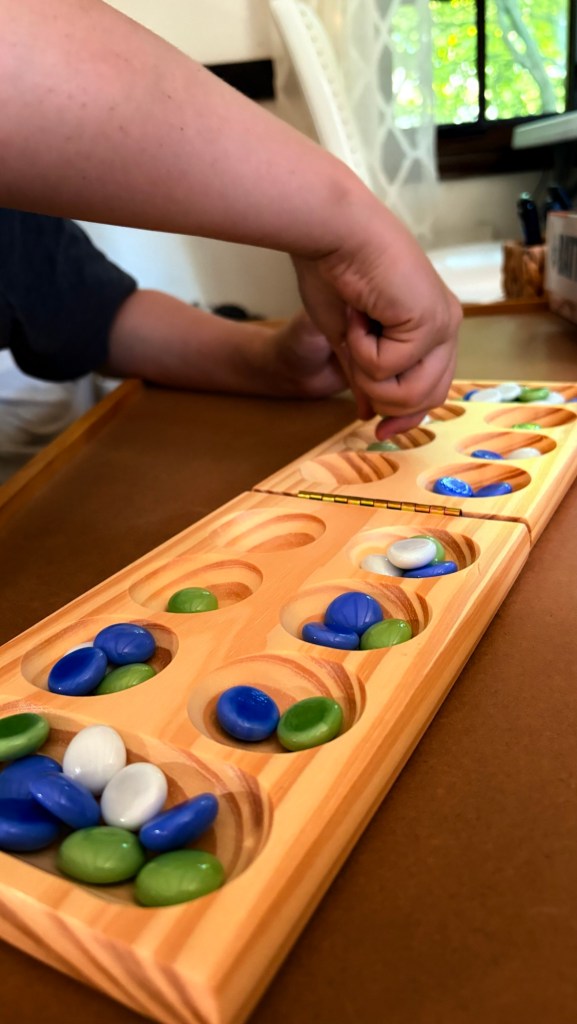
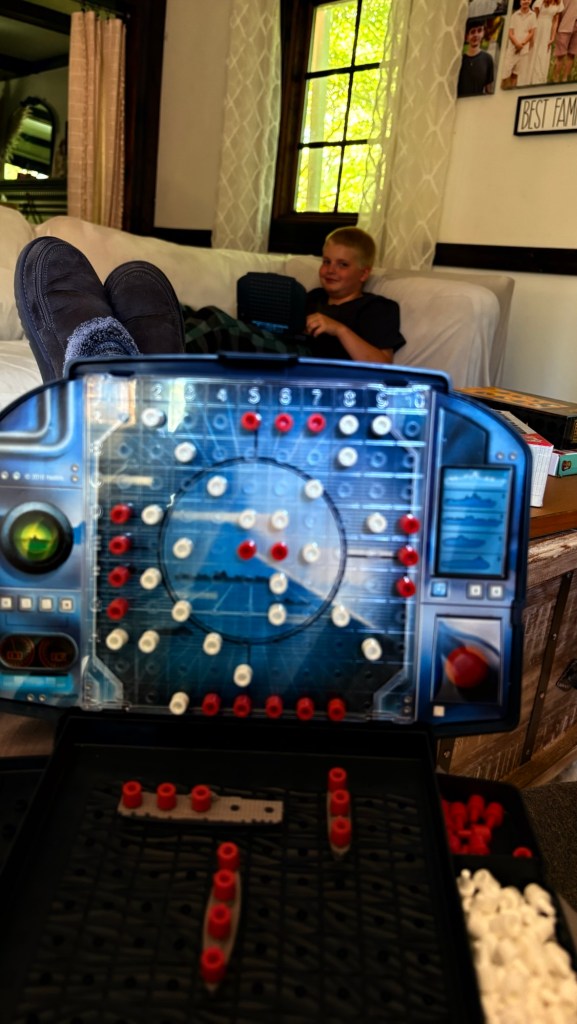
In the ticking hours that I’m alone though, there is a subtle, yet deep ache as my days of motherhood fold up quiet. I laid in the swing today, drinking in the perfect temperature and watching the shadows dance with the sunlight. It occurred to me why I feel like I’m carrying grief in this season. It’s the lie of rejection whispering scorch-hot that because I am no longer needed in the same ways, I am no longer needed at all.

It tells me that as his world expands, my place in it shrinks into irrelevance. But as the wind stirred the trees above me, God gently reminded my heart of a deeper truth; transition is not rejection, and release is not loss.

For years my arms have been a safe harbor; the primary point of reference. But motherhood in this season isn’t about clinging tightly to keep them close; it’s about learning how to love them from a beautiful, prayerful distance.

The grief I feel isn’t a sign that I’ve failed or that I’m being left behind—it’s simply the sacred price of a love that did its job well. We pray for our children to be confident, faithful, and independent. When those prayers are answered, the quiet room left in their wake can feel heavy, but it is also holy ground.

As I learn to rest in this next chapter I know that God isn’t done writing the story of my growing littles, and He certainly isn’t done writing mine. The God who held me through sleepless toddler nights and busy childhood years is the same God who holds my quiet hours now.

When the silence feels too loud and the ache creeps in, I can bring those heavy feelings to the One who understands holy transitions. I can grieve the grace of the past without fearing the future. It is okay to weep for the little boys and girls who held my hand while simultaneously thanking God for the young adults stepping into the sun.

Have you found yourself on the surprisingly lonesome road of motherhood as your children run ahead to take flight? We can trust Him with the “last lasts.” Every finished chapter in motherhood opens the door for God to reveal something new in us. The hours may feel quieter, and the days may fold up soft, but a mother’s heart remains their home anchor—no matter how far their feet wander.

marriage

Solitary Confinement

~Dedicated to my wingman~

When my husband was on active duty in the Air Force he traveled often. Every time that he packed a suitcase I slipped a special treat inside along with a written card of my love. A piece of me to remind him what waited for him upon his return.

When he retired from the military, but still had to travel, I continued this tradition, but as the cadence of his trips grew closer together I sometimes found it difficult to come up with what to sneak into his bag. I also guilted myself about what kind of habits I was encouraging by keeping him constantly stocked on Twizzlers and Swedish Fish.

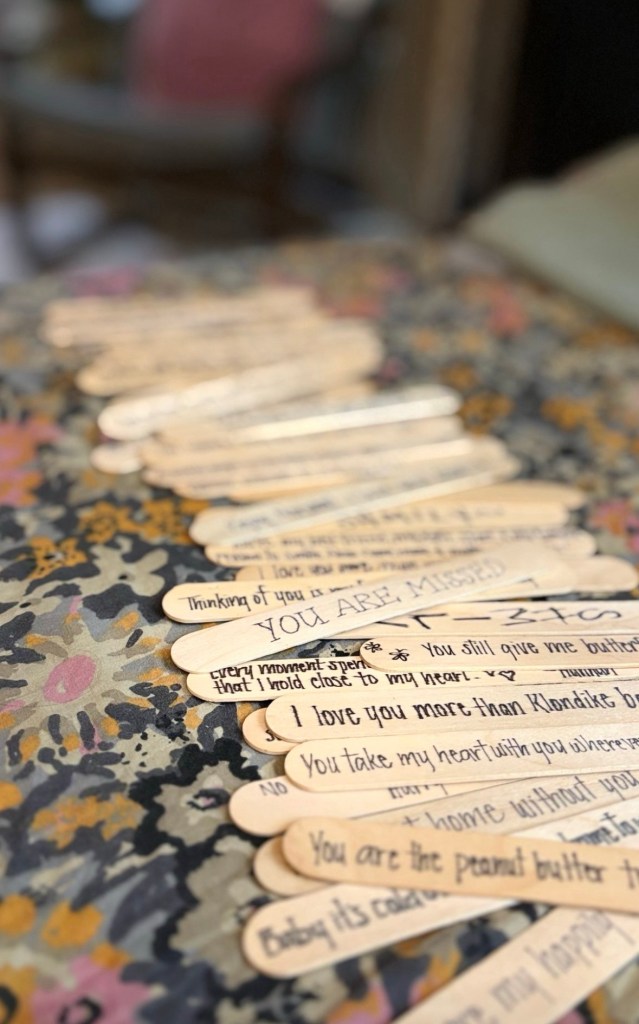
Looking through a hodgepodge of craft supplies one day, I came up with a new idea. I grabbed a big package of wooden sticks, the tongue depressor size, and a fine-tipped Sharpie. I wrote a sweet note on the stick and slipped it into his suitcase for him to find when the miles were between us. Every time he packed to leave I repeated this. Words that helped bridge the distance and time between us. Promises he could cling to.

Snacks disappear, cards get stashed away various places, but he started collecting those sticks one by one. The day I came across them I swallowed hard the thick lump that rose in my throat. My chest ached with a hollow pain as I stared at the very visual reminder of the number of times I had said goodbye just in the past 3 years.

In that moment, the tradition stopped feeling like something small and secret—and started feeling like evidence. Evidence of love that had to learn how to survive distance. Evidence of God meeting me in the in-between places, when my hands needed something to do and my heart didn’t know how to reconcile with my head.

I sat down with the sticks scattered on the bed and I began to read the notes again. Some were written with an easy smile, the kind that comes when you believe tomorrow will arrive on schedule. Some were braver than I felt. Some were shorter than I wanted them to be because my creativity struggled to come up with something new. But every single one carried the same message: you are not forgotten; you are loved; you are coming home.

And as I read, I realized something I hadn’t let myself notice. I had been building a bridge out of tiny, ordinary pieces—wood and ink and quiet prayers—because the enemy loves to tell you that distance is the end of a story. Distance is hardly the end. It is often the space where God grows the faith you can’t see yet.

The Bible says God is faithful. That faithfulness isn’t only for the mountain-top moments; it’s for the nights when you’re staring at a suitcase, wondering if the next goodbye will feel the same. It’s for the days when your hands are busy so your mind doesn’t run wild. It’s for the season when you can’t fix what you’re facing, but you can choose what you’ll cling to.

I thought about the promises hidden in those sticks. Not just promises from me to him—but the promises God had been putting in me.

So I prayed. Out loud at first, because sometimes my heart needs to hear itself surrender. “Lord,” I said, “You know every goodbye. You know how many times my throat has tightened and tears have pricked at my eyes. You know the way I’ve tried to measure love in small things because I’m afraid to measure it in time. Teach me how to trust You even when I’m counting.”

It didn’t feel like lightning or instant relief. It felt like God gently turning the lights on inside my chest.

As the days turn, the suitcase ritual has kept going, but my spirit has fought for change. I still slip sticks into pockets. I still tuck love into corners of his life. Only now, when I reach for a pen, I am not just trying to distract myself with sweetness. I am remembering that faith is a choice you make again and again—even when you’re tired.

The sticks have become more than reminders for him. They have become reminders for me. Reminders that love can be trained, like a muscle, through repetition. Reminders that grief doesn’t get removed by denial; it gets carried—one faithful moment at a time. Reminders that God is not late, even when our goodbyes feel long.

On the day I laid my eyes on that bundle of sticks and swallowed that thick lump in my throat, I also felt something else rise up underneath the ache.

Hope.

Not the kind that depends on the number of days left. The kind that depends on the One who holds the days. The kind of hope that says, This isn’t an ending. This is just distance writing its sad little sentences—while God writes something stronger beneath it.

Because whether we are separated by travels across the map or standing still in the same room, the truth has never moved— God is with us. He has been strengthening what I can’t explain. He is bridging what I can’t reach. He is turning ordinary routines into threads of grace.

Even now, when I see those wooden sticks—when I remember the weight of all those goodbyes—I don’t just feel sorrow.

I feel called.

Called to love faithfully. Called to trust steadily. Called to remember that every goodbye can become a prayer, and every prayer can become a promise we hand back to God—until home isn’t just a place we wait for. It’s a place we belong.

If you find yourself in the waiting for someone who says goodbye on purpose, don’t let the distance convince you that you’re forgotten. Let it drive you closer to the One who never leaves, the One whose love doesn’t run out when things get hard. Keep your heart soft. Keep your hands busy with what’s good. And when you don’t know what to pray, pray the simplest truth: “God, hold me in the in-between. Strengthen me for today. Teach me how to hope without losing myself.”

Because even when a person walks away, God remains. Even when goodbye keeps coming, God keeps holding the thread.

Friendship

Chasing Fireflies: The Anatomy of a Late-Night Rescue

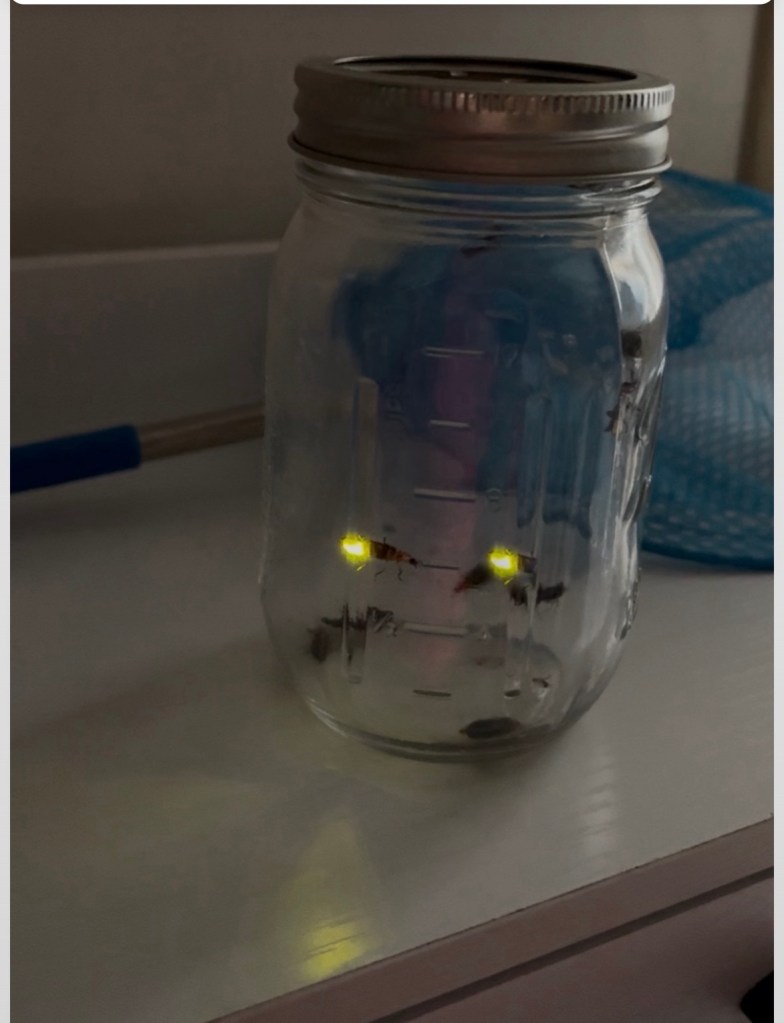
There is a friend who sticks closer than a brother. And then there is a friend who will drive 20 minutes at 10:00pm to press into your hand a jar with two potentially slightly smooshed fireflies that she probably caught while barefoot in the yard her pajamas, but she listened to you bare your soul that day, and she knew that’s all you needed to keep going right now— two, tiny, flickering lanterns to remind you that the dark doesn’t win. Not today.

They weren’t spectacular. They weren’t a grand, sweeping gesture that would make waves on social media. They were just two bugs in a repurposed canning jar, their rhythm a little frantic, casting a faint, irregular glow against the dashboard of her car.

But as she handed them over, her hair still tangled from the evening wind, it hit me: This is what real love looks like.

We live in a world that thrives on “let me know if you need anything” text messages—well-meaning, but safely tucked behind a screen. We have become experts at offering passive support. But a firefly friend? A firefly friend doesn’t wait for an invitation to the tragedy. They don’t need a clean house, a put-together version of you, or even a logical explanation for why your world is tilting on its axis.

They just show up. Even if it’s late. Even if they’re in their pajamas. Even if all they have to offer is a fragile, fleeting piece of light they chased down in the dark just for you.

When you bare your soul to someone, you hand them your vulnerability. It’s terrifying. You wonder if you’ve said too much, if you’ve become a burden, or if they’re secretly judging the mess. But the right people don’t look at your broken pieces and see a chore. They see an opportunity to hold the flashlight while you figure out how to put things back together.

Last night, those two slightly smooshed fireflies told me three things I desperately needed to hear:

 1. “I listened.” My friend didn’t just hear my words; she felt the weight behind them.

 2. “You are worth the effort.” Worth the drive, worth the mosquito bites, worth the interruption to her night, a night that if we are being honest, SHE should have been the one in bed early having gifts dropped by!

 3. “You are not alone in the dark.”

If you are lucky enough to have a friend like this, pull them close. Thank them. Let them know that their messy, barefoot magic saved you. And if you’re sitting there wondering where your firefly friend is, maybe this is your invitation to be one. Look around your circle today. Who is sitting in the dark? Who just bared their soul?

You don’t need a grand plan, a perfect speech, or a pristine gift wrapped in a bow. Sometimes, all it takes is a willingness to run out into your own yard, catch whatever little bit of light you can find, and bring it straight to their door.

Because at the end of the day, we aren’t the source of the light anyway—we are just the ones called to carry it.

When God asks us to love our neighbors, He doesn’t ask for a flawless production. He asks for a willing heart. He takes our smallest, messy, “yard-caught” efforts and multiplies them by His grace.

So if you’ve been waiting until you have it all figured out, or until your offering feels “good enough,” take a deep breath and let that pressure go. Step out into the dark, trust the One who commands the stars, and go share the flicker you have. You might be surprised by just how brightly God can shine through the cracks of your ordinary, beautiful obedience.

Gratitude

Why the Wait?

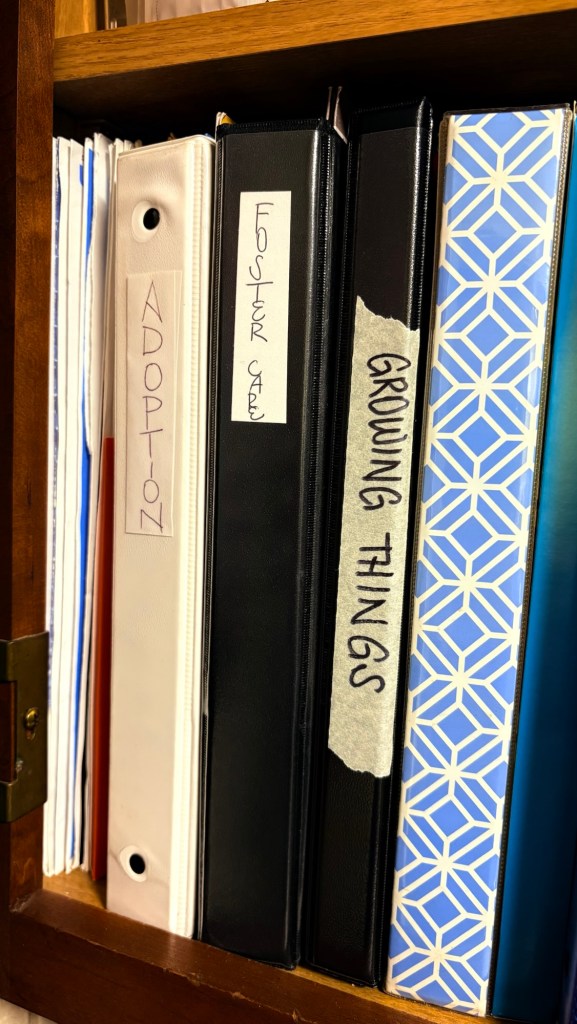
A few days ago I opened a particular cabinet in my kitchen, something I do on a frequent basis, but this time my eyes locked on a row of binders and folders, and I took pause. The worn black and white binders each bore their own label; “adoption,” and “foster care.” Though these haven’t been pulled out and used for years now, I have never been able to swallow the lump that forms in my throat when I think about throwing them away.

Each binder, filled to capacity with neatly organized forms and checklists, represents hours of work, celebrations and tears, and countless prayers. And yet with the flood of memories attached to each binder hangs a thick question mark in my mind. “Why Lord, did you put in my heart the desire to foster and adopt for it to only be a short punctuation mark in my story?” “Why did you prepare my heart to care for the multitude of children needing homes, to only have one child take up residence in our home, and so temporarily at that?”

For years I haven’t understood why so many doors opened before us, just for the story to keep having unexpected plot twists.

But standing there in the quiet of my kitchen, staring at those faded labels, a gentle realization began to settle over my heart. Maybe the reason I couldn’t throw those binders away wasn’t because they represented a broken promise, but because they represented a sacred altar. They were proof of a time I said yes, even when it was terrifying.

I’m starting to see that some things God asks of us are simply to refine our obedience and trust in Him. He doesn’t always call us to a specific outcome; sometimes, He calls us to a posture of surrender. The lesson is in the footsteps, not the arrival.

It is so easy to get caught up in the destination. We think that if God gives us a burden for the orphan, the only successful conclusion is a full house and a finalized adoption decree. But God operates on a different economy. He is far more interested in who we are becoming on the path than where the path physically leads.

Isaiah 55:9– “As the heavens are higher than the earth, so are my ways higher than your ways and my thoughts than your thoughts.”

Maybe I never was meant to be the mom to a house full of adopted or foster children. And as painful as that is to type out, I can finally say it with a peaceful heart. The lesson was never about the destination; it was entirely about the journey to get there.

Looking back, those years of preparing, praying, and waiting stretched me in ways comfort never could have. Through the twists and turns, God refined my faith. He tested my willingness—like Abraham on the mountain, God wanted to know if I trusted Him enough to lay my plans down at His feet. He broke my heart for what breaks His; even if those children never slept under my roof, I learned to love the vulnerable with a depth I didn’t know I possessed. Most of all, He became my anchor. When the doors shut and the plot twists came, I had to learn to trust His character when I couldn’t trace His hand.

I closed the cabinet door, but the heavy question mark that had hung over me for years felt a little lighter—maybe it was even starting to look a bit more like an exclamation point. Those binders aren’t a monument to a failed dream. They are a monument to a beautiful, messy, obedient yes.

If you are in a season where God seems to have changed the coordinates on a map He gave you, take heart. He hasn’t wasted a single step, a single tear, or a single prayer. The destination might look different than you imagined, but the refining of your trust along the way? That is exactly what He was after all along.

Terminal

Drifting

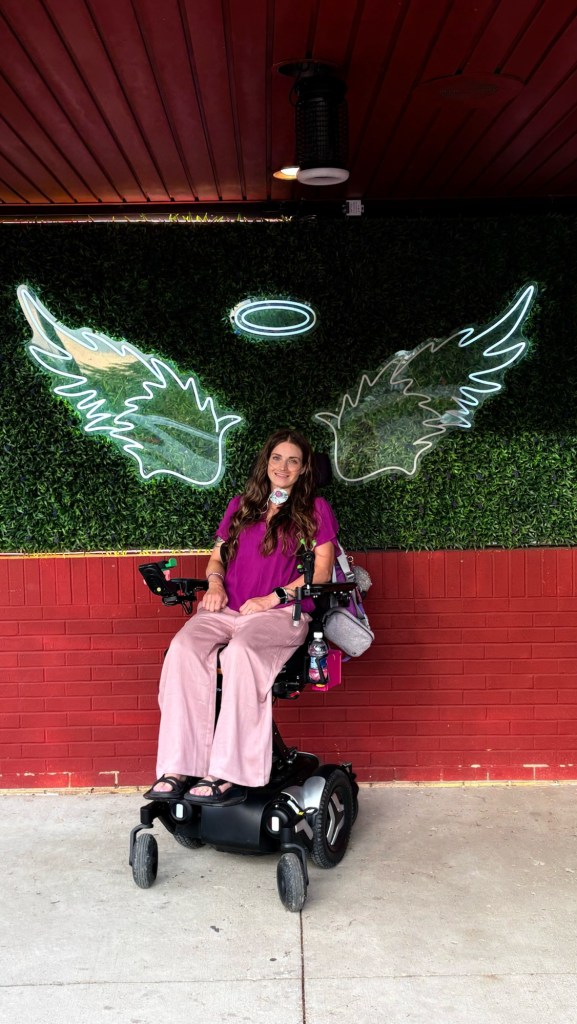
There was a time when they were the new couple. The friendly girl, not afraid to take on a bleak prognosis, and her wingman, always at her side helping her along.

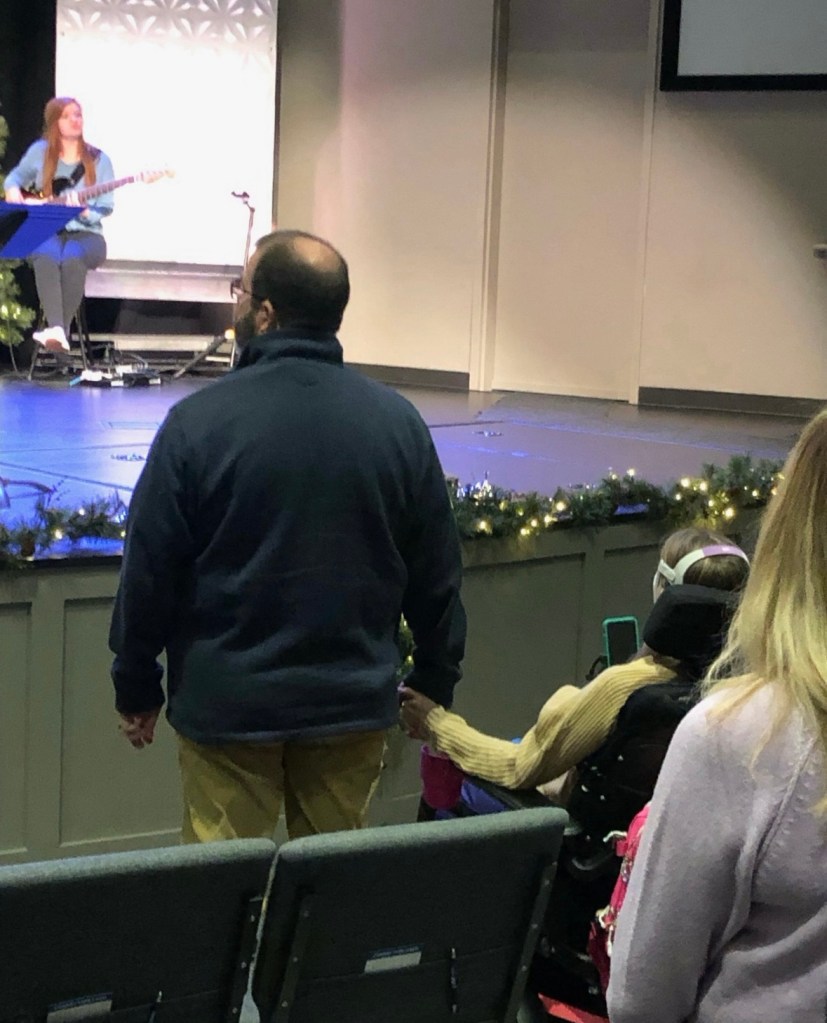
Then things started to change. The wingman was often tied up elsewhere, and eventually wasn’t available to pursue the same life she did, so she continued showing up on her own, often with a kid or two in tow. And then that dwindled too, the kids stopped wanting to get up on Sunday mornings, pushing back against beliefs they once embraced.

The girl continued to push herself to be there, sometimes through difficult obstacles. A wheelchair ramp that often did not work. A car door that jammed half the time. But instead of resolution, she had to soldier on in the best way she could, piecing things together to work so she could still show up.

Being in that place made her come alive, surrounded by likeminded friends journeying together. Eventually though, even that got too hard in a body that was fighting against her in every way.

When she tried to use her gifts in the ways she still could, she was nothing more than an inconvenience. Where her phone used to light up if she left a vacancy in the front row, it now sat gray and silent, as if the empty space had simply backfilled in her absence.

She hoped that the community she worked hard to build around her would continue to surround her in this new season and new capacity, but things grew quiet.

The walls of her room that used to echo with presence and laughter now felt more like walls of a prison, as visits became fewer and further between. Still she clung to the hope that her heart and her home would be full as she journeyed toward Home. Then came the realization that this road was going to end just as lonely as it had begun.

But that wasn’t the whole truth—just the part she could see.

Because somewhere along the way, she had quietly started measuring love by footsteps and phone calls… by who showed up and who didn’t. And while those absences were real and painful, they were never the full accounting of her life.

What she couldn’t always feel—but had not lost—was presence.

Not the loud, bustling kind that fills a room on a Sunday morning. Not the kind that depends on functioning ramps or willing friends. But the steady, unrelenting presence of a God who does not require her to “get there” in order to be near.

In the stillness of that room, where the walls sometimes felt too close and the silence too loud, there was Another who had never once failed to enter in.

The One who saw every effort it took just to show up.The One who noticed when no one else did. The One who did not measure her faith by attendance, but by endurance.

And maybe—though it took time to admit—her life was not a story of abandonment, but of being held in ways she didn’t expect.

Because the truth is, community can falter. People can disappoint. Even the most well-meaning hearts can drift when life gets busy or uncomfortable or unfamiliar.

But God does not drift.

He sits beside hospital beds and wheelchairs.
He remains when invitations stop coming.
He speaks in quiet when the noise of life fades.

And He does not wait at the finish line—He walks every inch of the road. So while it may have looked like her story was ending the way it began, heaven would tell it differently. It would say she was never unseen.
Never unsupported. Never alone.

It would say that every hard step she took toward Him that felt unseen mattered more than a hundred easy ones taken in comfort.

And it would remind her—gently, faithfully—that “home” was never something she had to gather people to reach. It was always where He was. And He had been there all along.

Uncategorized

Leading my Limits

When I opened my arms wide to welcome in a community that would keep us afloat on the days we need it, and hold us up on the days we are too frail, I also opened my arms to a whole range of perspectives, experiences, and opinions. It stands to reason that with so many different brush strokes making up my tribe, there will sometimes be tension when considering my situation.

I am a terminally ill young(ish) mom, wife, medical professional, friend, and relative with an awful lot of people who care deeply about me and want the best for me. And each of those “best wishes” is shaped by that person’s own knowledge, fears, and life experiences. I’m genuinely grateful for that—it means no stone is left unturned, no possibility ignored, no concern left unspoken. That kind of care is a gift.

But if I’m honest, it can also be a lot to carry.

I have been offered the full spectrum of doctors’ names and specialties, an impressive number of healing stories shared from personal experience, and a wide array of remedies that are “sure to help”—from expensive teas and elaborate oils to unconventional rituals and everything in between. Each suggestion is given with love. I know that. I feel that.

And still… it can be overwhelming.

Because underneath all of it is an unspoken assumption: that I might not be doing enough, considering enough, or protecting myself well enough.

The truth is, I am living inside this body every single day. I am the one weighing the risks, measuring the energy costs, and deciding what is worth it and what is not. I am constantly calculating—what will give me more life, and what will simply take more from me.

I need the space to do that.

I need the freedom to say, “Thank you, but no,” without feeling like I am letting someone down or missing something critical. I need permission—not from others, but from myself—to trust my own judgment.

Because I am not passive in this. I am not unaware. I am not neglecting my care.

I am choosing, very intentionally, how I spend what I have.

Sometimes that will look like pursuing treatment. Sometimes it will look like resting. Sometimes it will look like saying yes to something that feels worth the risk, and other times it will look like protecting my peace at all costs.

All of those choices are valid.

So if you are someone who loves me—and I know you are—please hear this gently: your care means everything to me. Your suggestions come from a place of compassion, and I don’t take that lightly.

But the most supportive thing you can offer me is trust.

Trust that I am listening.

Trust that I am thinking.

Trust that I am choosing with both wisdom and intention.

And trust that I know, better than anyone else, what my body and my life require in this season.

Walk with me. Sit with me. Pray for me. Laugh with me.

But please, let me lead when it comes to my own limits.