
If you watched my video this week about getting new glasses, you undoubtedly noticed its lighthearted tone . I try to add an underscore of humor to all of my videos there, since the goal is education and awareness about MSA, not to garner pity or sad feelings from people. In reality, this latest change for me has been a little more heavy than humorous.
It started when I noticed my vision had pretty rapidly gotten very blurry. I wondered if it was a side effect of one of my medications, or if the slight glasses prescription I already have needed to be updated. When I went in for an eye exam, I learned it was neither. The reason for the profound vision loss I was experiencing was because my disease has weakened the muscles controlling my eyes so much that the blurriness I have been noticing is actually me seeing double.
The doctor that saw me that day was so compassionate and kind-hearted; I could tell he truly cared about my situation and wanted the best outcome possible for me. I sat staring through the giant robot-thingie while he dialed in lens after lens, trying to make it strong enough to correct my vision. It got better— the two birthday candles that started a few hand widths apart from each other moved in closer and closer, but even at top strength the candles never merged into one.

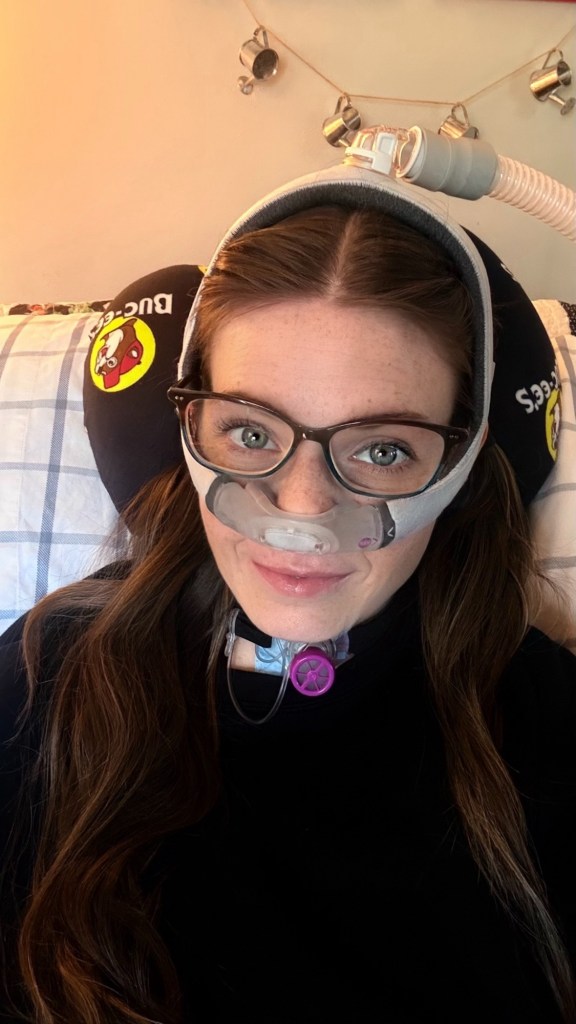
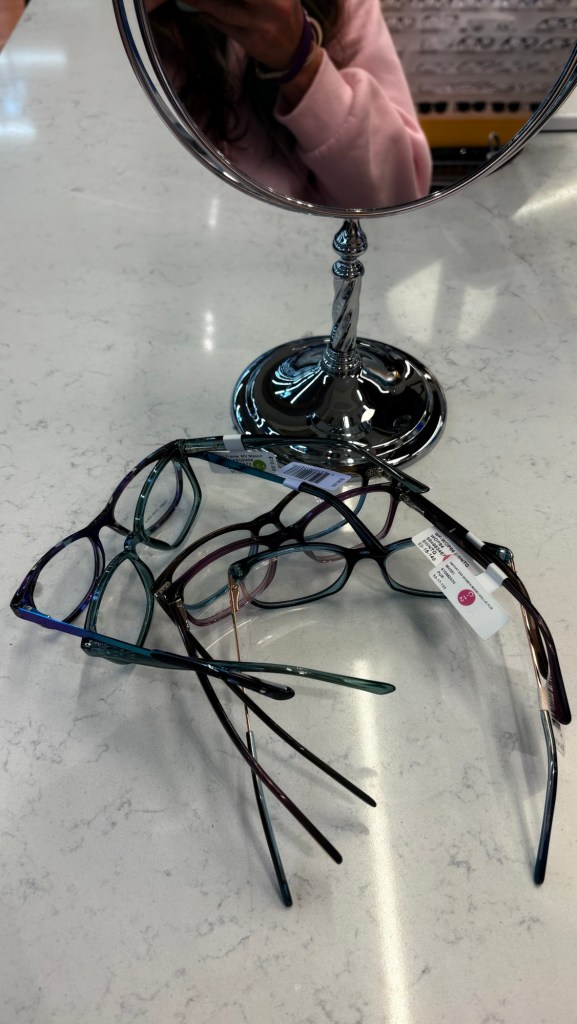
So I left the office with a new pair of thick bifocal glasses, feeling very much like the rug had been yanked out from under me by this new development that had not even been on my radar. And truth be told, even with my new specs there is a lot that has been lost as far as what I can see in detail, which in turn affects what I can do.
It was a disheartening blow at first, that left me wondering what I had to offer now. My Etsy business would be affected, my art, my writing… what was left for me to give to the people I love and care about?
For a little while, my mind went to the same place it always used to go when something was taken away from me: What am I still useful for?
Illness has a way of asking that question over and over again. Every new limitation feels like another subtraction sign—another thing crossed off the list of what you once could do.
And if I’m honest, I realized something in the middle of that discouragement: somewhere along the way, I had quietly started believing that my value to God and to other people was tied to my abilities. My productivity. My output. What I could make, build, write, organize, or contribute.
But that has never actually been the way God works.
God never needed my abilities.
He never needed my Etsy shop, or my artwork, or my words, or my capacity to juggle responsibilities and keep producing things that look impressive on the outside. None of those things were ever the offering He was asking for.
What He wanted was always much simpler—and much harder.
He wanted my heart.
When I started reading through Scripture again with this in mind, it was everywhere. Over and over, God makes it clear that He is not impressed with human strength or skill. In fact, He seems to go out of His way to work through weakness.
He chose shepherd boys, stutterers, widows with two coins, fishermen with no education, and people who openly admitted they were afraid and inadequate. Again and again, God reduced the resources so that no one could mistake where the power came from.
Which means my declining abilities are not a surprise to Him.
They don’t disqualify me.
If anything, they strip away the illusion that I ever had something impressive to bring to the table in the first place.
The truth is that my offering was never supposed to be what I could do.
My offering was always supposed to be me.
My trust.
My willingness.
My obedience in whatever small space I’m given today.
The older I get and the more this disease takes, the more God keeps narrowing things down to that single point: Will you still give me your heart when the things you used to rely on are gone?
And the surprising thing is that there is actually a lot of freedom in that question.
Because if God only wanted my abilities, I would eventually fail Him. Bodies break. Energy fades. Vision blurs. Talents come and go.
But if what He wants is my heart, that is something illness cannot take away.
Even on the days when my eyes won’t cooperate, when the candles refuse to merge into one clear image, when I can’t do half the things I used to do… I still have something to give.
I can still choose to trust Him.
I can still choose to love people well.
I can still offer the small, quiet faithfulness of a life surrendered.
And maybe that was the lesson hiding inside this unexpected trip to the eye doctor.
My vision may be fading in ways I never anticipated.
But in a strange way, the picture itself is becoming clearer.
God never needed my abilities.
He just wanted my heart.

 Choosing Hope