
Most of you that see me see a small snapshot of me as a whole – usually on the best days- when I’m able to get out to church or to my kiddos’ performances. Because I’ve always been a kind of a private person, and I also fear being a burden to others, there are very few that have seen me at my most vulnerable as this awful disease has ravaged my body.
Maybe because the hard days are starting to outnumber the easier, or maybe because I am desperate for others to understand the depth of my need for help and prayers, or maybe because it’s so extremely isolating to live in this place of putting my best face forward, I am going to give you a glimpse of what it looks like and feels like to wake up and do battle against a body that is trying to kill me.
***I gave my husband permission to take some pictures of some of the hard moments***
A morning snapshot:
5:40 am. My alarm goes off. This gives me time to swallow a few pills to try to ease some of the pain searing through my body before I have to get out of bed. Snooze button a few times while the meds start to work, and then it is time to wake my littlest to start his morning routine.

Fatigue starts early, filling my arms and legs with wet cement as I go about fixing him breakfast and snuggling in on the couch to read our devotion together and watch part of a show.
7:00 am. My little is getting ready for the bus and I have to excuse myself as I’m dry heaving- my body rejecting the fact that I put pills and a sip of water into a digestive tract that has little function left.

7:29am. Last kisses and hugs before my little man heads outside to catch the bus. Worry creases his forehead. “Are you sure Mom? I can stay home from school and take care of you. All I’m going to do is worry about you all day.” I force a smile and convince him I am fine, that I’m just going to rest today. Reluctantly he walks out to the bus, stopping at least four times to look back and blow kisses and throw I love you signs. My heart could melt.
7:32am. I limp for my hospital bed that is set up in our den where I can be closer to the family. This is where I spend the majority of my time.

When you see me out and about at church or one of my children’s games or concerts it is because I have saved every bit of my energy that day and probably the day before in order to attend that event. It takes everything out of me, and I usually make it home and collapse for the remainder of the day, every bit of me used up on the best things.
8:00am. Through the shower and ready for work, Mark comes in to check on me and gives me any medicine I need, makes sure I am on enough breathing support, and starts a tube feeding if I’m not too nauseous. Then he goes around the corner to where his desk sits conveniently close to where he can hear me if I need help.
If I have no appointments, this is where the bulk of my day is spent. Resting and saving every drop of energy to be present for my family when they are all home in the evening. I have had to choose between the things I enjoy and feel like I should be doing- like keeping house and meal planning and grocery shopping- and instead spend time napping, writing letters for the futures of my loves, reading and sketching in my Bible, writing some works I hope to see published some day. This conserving of my limited strength allows me to be awake and upright to ask about the stories of my childrens’ days, and share a meal around the table, or attend their concerts or sporting events.
………………………………………
Tucked in the binder that holds all my important medical papers, behind the copy of my DNR is a sheet that documents most of the complications that I am affected by as a result of my disease. It is a spiderweb of symptoms, doctors, and treatments that all fall under the same central header; Multiple System Atrophy. Some of these ailments are very visible, like having to use a wheelchair, or needing support for my lungs to breathe, but many of them are tucked beneath the privacy of my roof; wrestled with far from the view of my family and friends.

Pain and spasticity are big ones near the top. They are managed by a team of two of my kindest doctors who do their best to relieve my discomfort and keep me moving. It is a never-ending battle, trying to calm the muscle spasms and ease the pain that they create. One of the big guns I have for this battle is an implanted medication pump that sits in my lower abdomen and delivers antispastic medication directly into the fluid of my spinal canal.

Some of the worst spasms I experience are from my esophagus. These come on as crushing chest pain, making it nearly impossible to talk or swallow. The only relief is small tablets that dissolve under my tongue, and then I wait for the spasm to cease.
Gastroparesis is a fancy word that means the contractions of my digestive muscles are too weak to adequately push food through in the way it should go. This has resulted in a lot of weight loss and malnutrition, and frequent nausea and vomiting.

I have two feeding tubes currently. One that goes to my stomach that I can “vent” when I’m feeling sick, and one that goes directly into my lower intestinal tract where my feedings have the best chance of being absorbed. This means often not having an appetite, or if I do eat it sometimes comes right back up.
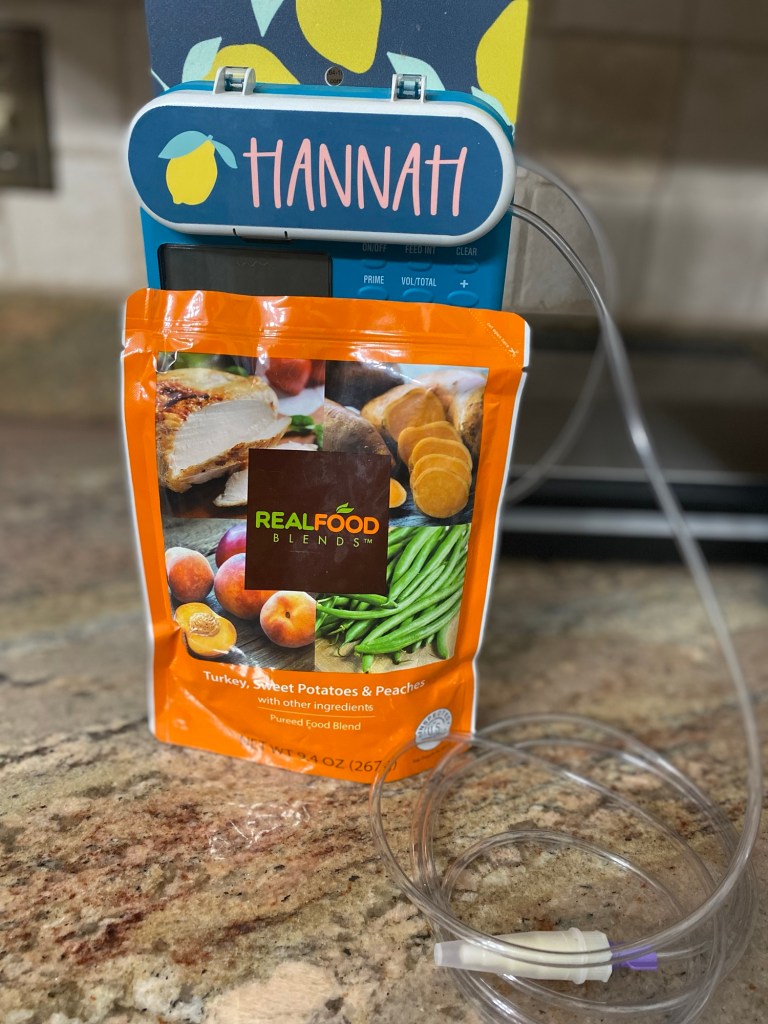
Another consequence of my digestive malabsorption is that the nutrient deficiencies cause anemia. This has resulted in the need for blood transfusions and iron infusions.


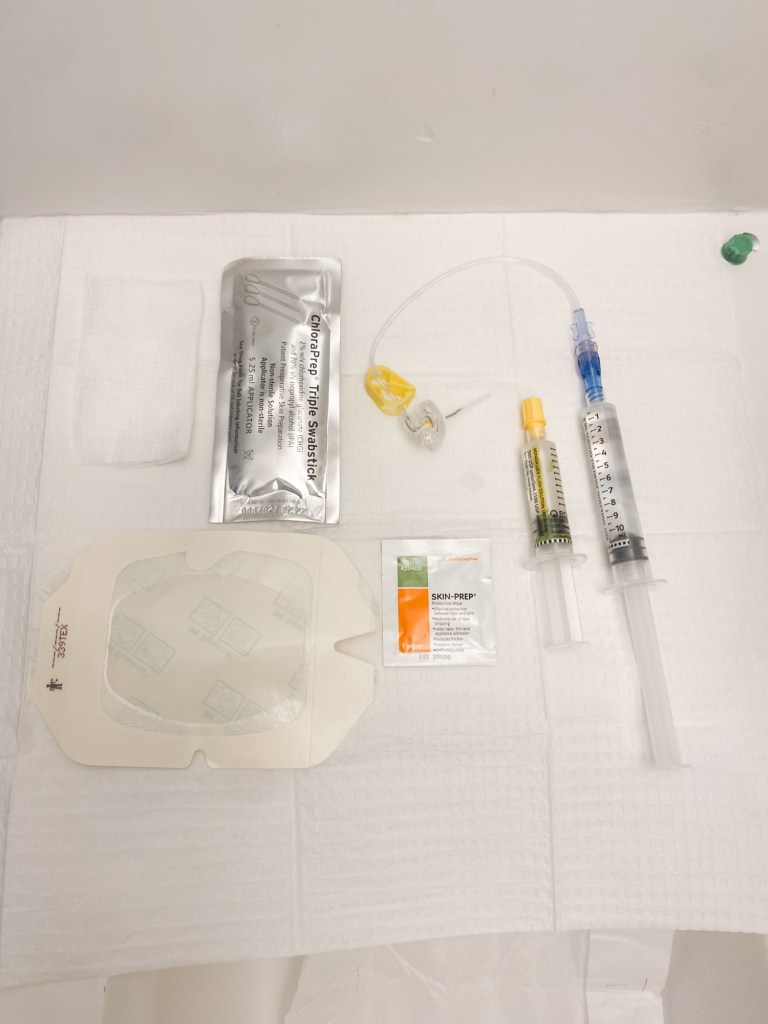
Not being able to eat enough to maintain my nutrition also means being chronically dehydrated, so I have a port implanted in my chest for receiving fluids throughout the week. This has to be accessed once a week by a sterile process of introducing a special needle that stays in the port for the week before changing it again. Fortunately this was one of the easier things I had to learn, and my previous medical career was a big help.
Impaired balance, weakness, and muscle wasting is a result of my nerves not communicating with their assigned muscles. Weakness and balance issues causes a lot of falls, and some embarrassing situations like squatting down in the grocery store and then not having the strength to stand back up. Some of these things I’ve learned to compensate for, and some of them just mean adapting to a new normal which involves a lot more frustration than used to be.

POTS is another result of having MSA. It stands for Postural Orthostatic Tachycardia Syndrome, and it means that when I go from lying or sitting to standing, my heart gets significantly less blood return than it needs, which causes extreme lightheadedness and fainting. My heart speeds up to try to compensate, but without the blood return it turns to a losing situation. I’ve gotten to where I can usually tell when I’m going to faint (so can Mark), and sometimes I’m able to sit safely before falling, but other times it results in goose eggs, an assortment of cuts and bruises, and an occasional broken bone.
Since this illness first took hold I have had to go under for 10 different surgeries. Feeding tubes, medication pump, port implants, repairing damaged joints, and some involving my brain. My body is a roadmap of scars, boasting of the battles I’ve won.

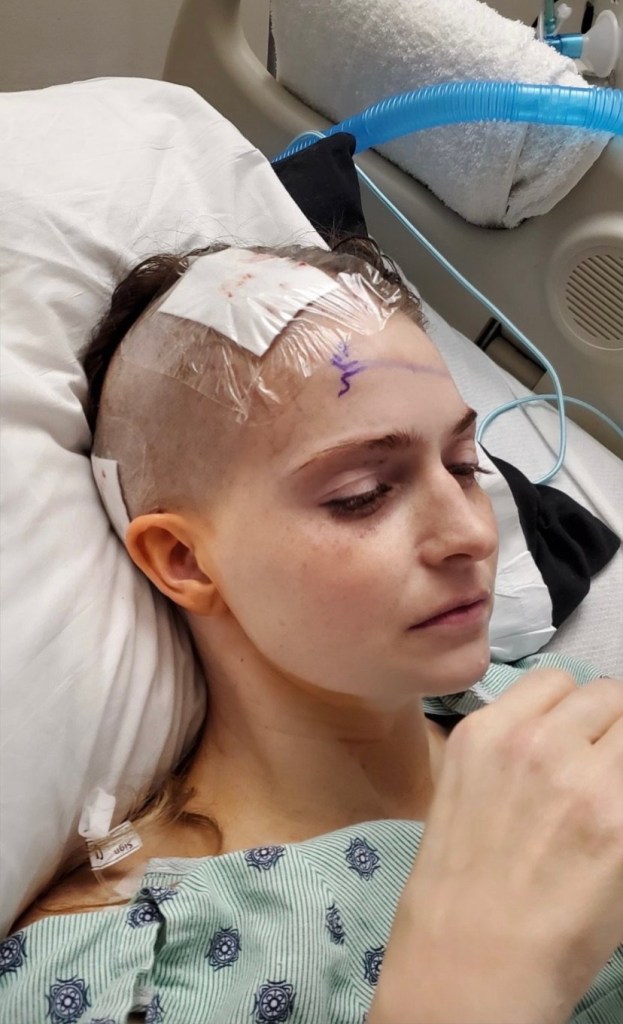
When I had a series of seizures after my second brain surgery I sustained damage to the part of my brain that allows for short term memory. When my memory was tested following this event, it was described as severe and profound memory loss. Daily it’s a frustrating struggle as I repeat myself and ask the same questions over and over.

The disruptions in my ability to think and concentrate makes it difficult to control my emotions, leading to bouts of depression and anxiety.

Neurogenic bowel and bladder means I can’t just hop up and use the restroom; I’m confined to making sure I have urinary catheters with me at all times in case I need to empty my bladder.

Fatigue. There are probably a hundred different reasons why I feel utterly drained most of the time. Pain is tiring. Sleep apnea is not restful. Using so much energy to breathe and fight spasticity every minute of the day is simply exhausting. The combination of all of these things leaves me feeling like I could crawl into bed and hibernate for months.

The most disruptive and serious of the symptoms of MSA for me is chronic respiratory failure. This started with me having low oxygen saturation and needing extra oxygen through a nasal cannula, and wearing CPAP and eventually BIPAP at night.


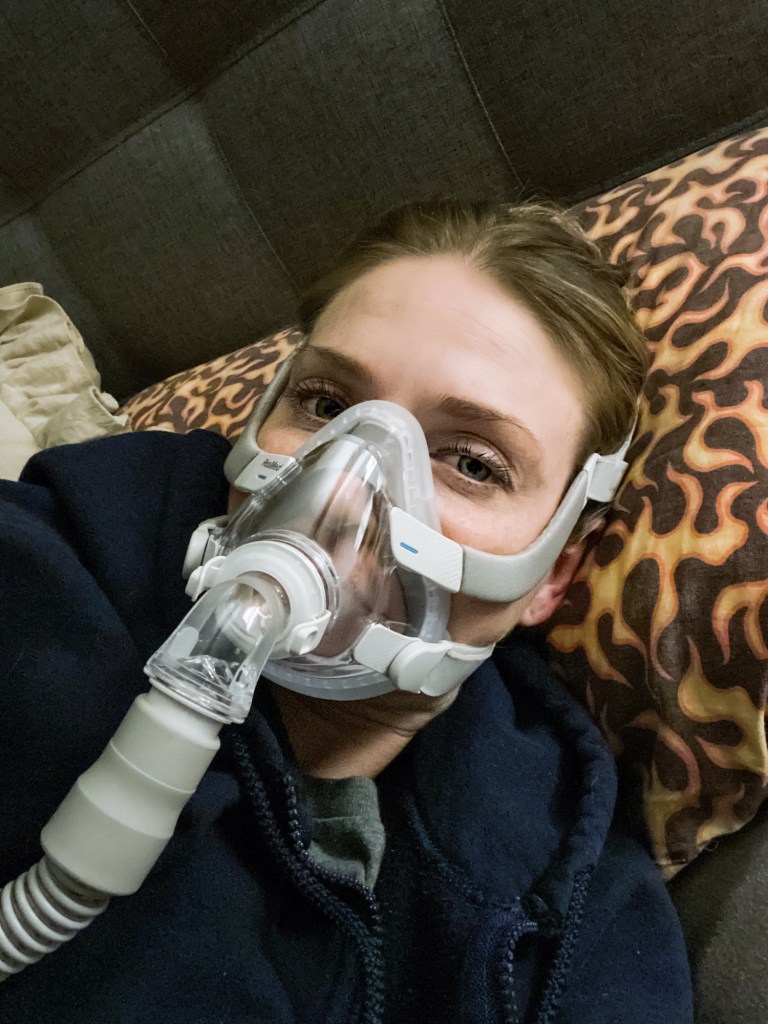
It has progressed as my breathing muscles have gotten weaker and weaker, and now I have to use a ventilator with a mask throughout the night and most of the day. My doctors have had to continue turning up the pressure of how hard my vent has to blow, which is not only uncomfortable, but it makes it difficult to hear and speak. At this point even with the higher support I’m still struggling to get a good breath, and the side effects of using my vent are becoming more bothersome. My doctors are working on the next steps I need to be able to breathe better and conserve my energy.
As the muscles in my legs have grown tighter and weaker it has gotten harder and harder to walk any distance. That coupled with the extreme shortness of breath that even a short walking distance involves have left me no choice but to use my wheelchair for getting around. As much as I would prefer to walk hand in hand with my people, I am nothing short of grateful that insurance worked so kindly with us to provide a chair that gets me around and provides comfort for my tender places.

These are the hills and valleys I battle on the daily. Some days it is easier for me than others, but on all of the days I have found myself constantly held and loved and comforted by my Heavenly Father, even in the pain and uncertainty. He has given me the privilege of being able to give him all the glory, and he sustains me and provides for me whether anyone else shows up or not. He is a good, good Father.

 Choosing Hope
Although physically weak, you are the strongest person I know Hannah!!! Thank you for sharing your daily struggles, both physically and emotionally. You are amazing!!! My prayers go out to you and your family.
LikeLiked by 1 person
Cindy, thank you for your kind words and for always being such an encouragement to me!
LikeLike
Thank you for sharing what goes on behind the scenes, Hannah, as you deal with this affliction hour by hour. Thank you for allowing us to peek behind the happy and encouraging photos of you and your beautiful family.
LikeLike
Thanks for being along for the journey, Kim!
LikeLiked by 1 person
Hannah,
What subtype of MSA do you have?
I was diagnosed with MSA-c in August 2022. Though, I was diagnosed 2 years earlier(mistakenly) with pure autonomic failure so I figured I’m about 4 or 5 years into this disease.
Wayne
LikeLike
Hi Wayne,
I’m sorry we have this in common. I also have MSA-C.
LikeLike
Wayne, I have MSA-C
LikeLike
Continue praying for you little sister
LikeLike
Hannah,
Your courage and perseverance are a testimony to the Lord’s grace and strength and the help and love of your family and all those who support you. I also tend to keep my struggles private, but there is definitely something to be said for candor and openness because it helps those around you better understand, and it also gives greater glory to God because His strength is seen more clearly in our weakness. Thank you for having the courage to share. God bless you and your family!
LikeLiked by 1 person
💜💜💜
LikeLike